
Why Are Your Glasses Pinching Your Nose? Causes and Fixes
Glasses that pinch your nose are often a sign that the frame is not resting evenly, the nose pads are misaligned, or the bridge shape does not suit your face. Avoid forcefully bending the frame yourself: changes can affect its balance and where the lenses sit. At our Sydney studio, we look at the whole fit, not just the sore spot, as part of our glasses fitting and comfort approach.
Glasses hurting your nose can result from narrow or poorly positioned pads, a bridge that does not match your nose, or pressure transferred from the temples. A brief contact mark alone does not identify the cause. Notice whether discomfort is on one side, whether the frame slips, and whether the pressure returns soon after you put your glasses on.
Why are your glasses pressing on your nose?
If the frame presses at one point rather than resting evenly, the bridge or pads may not be distributing its weight comfortably. The frame can also feel tight at the temples or sit at an angle, changing how it contacts your nose. A 2010 paper examined the relationship between spectacle weight and nose-pad contact area, highlighting these as linked considerations in frame fit, not simply questions of pad softness. You can read the published study on frame weight.
Notice where the sensation begins. A sharp pressure point at one pad suggests a different fit issue from a frame that feels heavy across the whole bridge or tight at the sides. If your glasses are new and discomfort is persistent, have the frame and lens position checked rather than assuming you need to get used to it.
Check the contact points before adjusting anything
When one side of your nose feels more tender, look at how the glasses sit while you face a mirror. Do the pads touch at similar angles? Does the bridge rest evenly, or is the frame tilted? Also check whether one temple sits higher or feels tighter. These observations help describe the problem, but they do not replace an assessment of the frame.
Nose-pad contact is only one part of frame balance. A pad can seem like the obvious source of discomfort when the temples are pushing the frame forward, or when the bridge shape does not suit your nose. Keep the frame clean, and avoid squeezing or twisting pad arms to test a change. Forceful handling can damage the frame or make its fit more uneven.
Can you adjust glasses nose pads yourself?
If you are wondering how to adjust glasses nose pads, start by identifying the type of frame. Separate pad arms and fixed bridges need different approaches, and a frame’s material and construction affect what adjustments are suitable. Do not use pliers or apply pressure to the frame if you are unsure how it will respond. An optical professional can assess whether the pads need repositioning, replacement or another solution.
A pad that is missing, damaged or visibly uneven is a good reason to book an assessment. If the frame has a fixed bridge, moving nose pads may not be an option; the bridge shape and overall frame fit may need attention instead.
When should a fitter assess the whole frame?
If the discomfort keeps returning, your glasses sit crooked, or you find yourself repeatedly pushing them back into place, ask for a professional fit check. The Association of British Dispensing Opticians notes that a dispensing optician can check pad position and that larger nose pads can spread the glasses’ weight over a greater area. Whether a pad change is suitable depends on the frame and how it fits your face.
At Lunettes Art Lab in Surry Hills, our Data-Driven Deep-Dive Professional Fitting assesses how a frame sits across the bridge, temples and ears, and checks lens position where relevant. Ricky Lim, our Eyewear Frame Fitting Expert and optical dispenser, has more than 16 years of experience. If you want to know what to expect from an in-person assessment, read about getting glasses fitted comfortably.
Could another bridge or pad design suit you?
If a fixed bridge does not sit securely or evenly, a different frame shape may be worth considering. A low-bridge fit design is one option to explore when a frame’s bridge does not match your features, but it still needs to be assessed on your face. Our comfortable glasses for Asian fit page explains this style of fit.
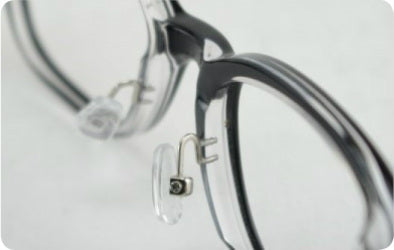
Some acetate frames can also be modified with fitted nose pads. The right option depends on the frame’s construction and your individual fit needs; a viewing of the clip below shows an example of nose-pad work on an acetate frame.
Book a glasses fit assessment in Sydney
If pressure keeps returning, you do not need to guess whether the cause is the pad position, bridge shape or overall frame balance. A hands-on assessment can identify where the frame is placing pressure and whether an adjustment or another design needs consideration.
We offer a complimentary 15-minute Signature Fitting for an initial assessment. For a more detailed review, our Data-Driven Deep-Dive Professional Fitting considers how the frame sits across the bridge, temples and ears, and checks lens position where relevant. Visit our Surry Hills studio or contact our Sydney team to arrange the next step.
Frequently Asked Questions
Should glasses leave marks on your nose?
A brief mark may appear after wearing glasses, but ongoing soreness, tenderness or pronounced pressure is a reason to check the fit. If redness or irritation persists, seek advice from an eye health professional.
Why do my glasses pinch on only one side?
The frame may sit unevenly, or one pad or temple may contact your face differently from the other. A fitter can assess the bridge, pads, temples and frame position together.
Can I make my nose pads wider at home?
It is safer not to force the pad arms or frame, since different frames need different adjustments. Ask an optical professional to check whether repositioning or replacing the pads is appropriate.
Will larger nose pads stop my glasses hurting?
Larger pads can spread contact over a greater area, but they are not right for every frame or wearer. A fit assessment can establish whether pad size, position or another part of the frame needs attention.
Can Lunettes Art Lab assess glasses that pinch my nose?
Yes, you can book a complimentary 15-minute Signature Fitting at Lunettes Art Lab for an initial assessment. Our more detailed frame fitting considers the bridge, temples, ears and lens position where relevant.