

How Long Does It Take to Get Used to Progressive Lenses?
Most people get used to progressive lenses within one to two weeks of regular wear. A first pair, a big prescription change or a new lens design can take a little longer. If everything still feels swimmy, narrow or tiring after a few weeks, the problem is usually the fit or the lens design, not you.
Key takeaways
- Wear them all day from the start; switching back slows adaptation.
- Point your nose at what you want to see.
- Ongoing trouble usually means a fit or design issue worth checking.
Why do my new progressives feel so strange?
The floor seems to tilt when you walk downstairs. Your laptop is only sharp if you lift your chin. The edges of the lens blur when you glance sideways.
Progressive lenses are lenses that blend distance, middle and reading power into one lens without visible lines. Your brain needs time to learn where each zone is, and the soft blur at the sides is part of every progressive design.
What helps you adapt faster?
| Do | Avoid |
|---|---|
| Wear them from morning to night | Swapping back to old glasses |
| Turn your head, not just your eyes | Looking sideways through lens edges |
| Drop your eyes, not your head, to read | Tipping your head back to read |
| Take stairs slowly at first | Rushing on stairs in week one |
Self-check: hold a page at your usual reading distance and look straight ahead through the lens. Now lower only your eyes. If the text sharpens near the bottom of the lens, your reading zone is roughly where it should be. If you have to tip your head right back, the fitting height may be off.
When is it not just adaptation?
Fit and optics are linked. The fitting height is the point on the lens where your pupil should sit, and the whole lens is built around it. If the frame slips down your nose or tilts, the reading zone moves too, and no amount of getting used to it will fix that.
Lens design matters as well. People who use screens all day, drive a lot or read for hours use different zones, and a design that ignores this can feel narrow.
How do we help with progressive lens adaptation?
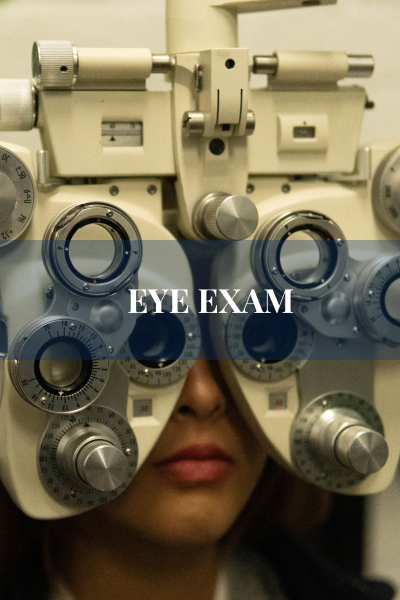
At Lunettes Art Lab in Surry Hills, Sydney, the Personalised Vision Scan is included at no additional charge with a comprehensive eye examination by our optometrists.
- Our optometrist confirms your prescription and eye health.
- The Rodenstock DNEye biometric scan measures your eyes in fine detail.
- The Behavioural Eye Movement Scan, a VR-based assessment, shows how you use your eyes and head.
- We fit the frame first, then measure fitting height, tilt and lens distance.
- Your progressive lenses are designed around those measurements, and we recheck the fit at collection.
Frequently Asked Questions
Will I ever stop noticing the blurry edges?
Most people stop noticing them once they turn their head naturally. Personalised designs can make the clear zones feel wider, but some edge blur is part of every progressive.
Can I drive in new progressives straight away?
Get comfortable walking and moving in them first. If distance vision is not clear, do not drive and see your optometrist.
Should I get separate computer glasses?
If you spend long hours at a screen, office lenses designed for middle distance can be more comfortable. Ask your optometrist whether they suit you.
Related reading: A Behaviour Based Vision Assessment for Multifocals.
Book Your Eye Examination and Personalised Vision Scan
If your progressives still feel wrong after a couple of weeks, it is worth finding out why. Our eye examination and scan look at both your eyes and how you use them.
Book a comprehensive eye examination
Think it might just be the fit? Book a complimentary 15-minute Signature Fitting.
Lunettes Art Lab
- Address: 249 Riley Street, Surry Hills NSW 2010, Sydney
- Phone: (02) 8385 4996
- Website: lunettesartlab.com
- Book a complimentary 15-minute Signature Fitting: book online
- Book a comprehensive eye examination: book online

Written by Ricky Lim