What a Comprehensive Eye Exam Can Reveal About Health
A comprehensive eye exam checks far more than whether letters on a chart look sharp. It looks at vision, eye health, how the eyes work together, and whether there are early signs of disease that may not be obvious yet.
That is why a routine visit can matter even when your sight feels “fine”. Official guidance from the National Eye Institute notes that a dilated eye exam is the way eye disease is checked early, before vision loss begins. NHS guidance makes a similar point: eye tests can pick up early eye conditions, and sometimes signs that need further medical investigation, before symptoms appear.
At LUNETTES ART LAB in Surry Hills, Sydney, that broader view matters. WE DON’T SELL GLASSES. The process starts with careful eye care, thoughtful dispensing, and practical problem-solving in a 1:1 booked consultation, not a rushed retail transaction.
What a comprehensive eye exam actually checks
A proper eye exam is not a single test. It is a set of checks that together build a clearer picture of how well you see and how healthy your eyes are.

Some parts assess visual performance. Others look at the structures inside the eye. Some tests are there to spot risk, even when you have no symptoms at all. This is why a prescription update and a comprehensive eye exam are not always the same thing.
The mix of tests varies by age, history, symptoms, and clinical judgement, though these are common components:
|
Test |
What it checks |
Why it matters |
|---|---|---|
|
Visual acuity test |
How clearly you see at distance and near |
Detects changes in prescription and baseline vision |
|
Visual field test |
Side vision and peripheral awareness |
Can reveal glaucoma-related loss or other concerns |
|
Eye muscle function testing |
How the eyes move and work together |
Helps identify strain, imbalance, or focusing issues |
|
Pupil response testing |
How pupils react to light and stimuli |
Gives clues about nerve function and eye health |
|
Tonometry |
Eye pressure |
Useful in glaucoma assessment |
|
Dilated eye exam |
Retina, optic nerve, and deeper eye structures |
Helps detect diabetic retinopathy, glaucoma, and age-related macular degeneration |
|
Eye health examination |
Lens, cornea, and other structures |
Can identify cataracts, injury, or abnormalities |
Why a dilated eye exam matters for early eye disease detection
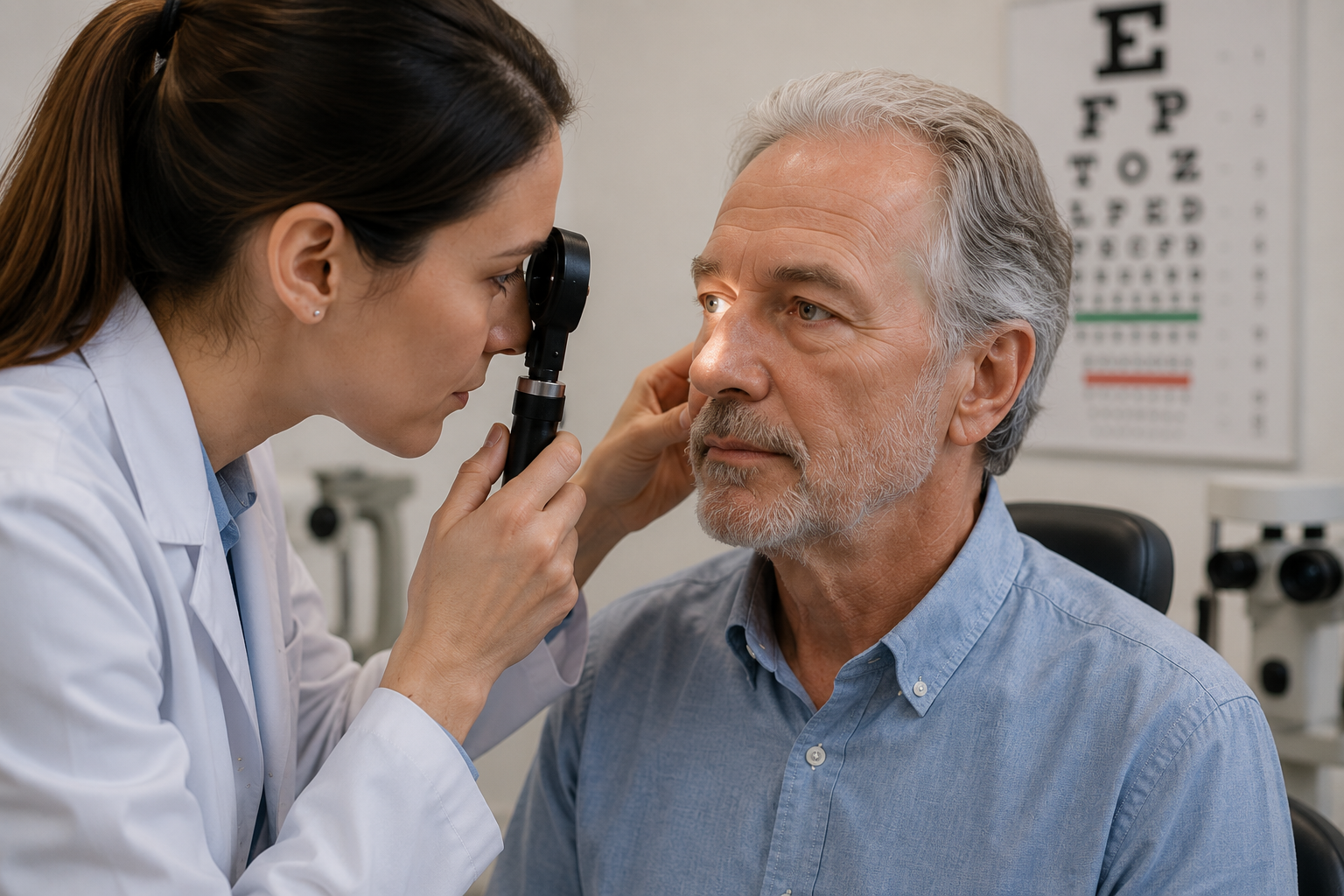
A dilated eye exam deserves special attention because it allows a clearer view inside the eye. Once the pupils are widened with drops, the clinician can inspect the retina and optic nerve in much more detail.
This matters because some serious eye diseases can progress quietly. Glaucoma is a classic example. Many people do not notice early damage because the loss often starts in peripheral vision. Age-related macular degeneration and diabetic retinopathy can also develop before obvious symptoms are felt in day-to-day life.
Clear vision today does not guarantee healthy eyes.
For many people, that is the single most useful reason to book a proper examination rather than waiting until vision becomes noticeably worse. A symptom-led approach sounds sensible, but eye disease does not always wait for symptoms before causing damage.
What a comprehensive eye exam can reveal about health
The best known findings are eye-specific. A comprehensive eye exam may help detect early glaucoma, cataracts, diabetic retinopathy, or age-related macular degeneration. It can also pick up injuries, inflammation, structural changes, and other abnormalities that need monitoring or referral.
The broader value is just as important. Eye examinations can reveal signs that warrant more medical review, even if the issue is not strictly “about glasses”. That does not mean an eye exam replaces your GP or specialist. It means the eyes can provide useful clinical clues, and a good exam can be an early checkpoint.
When something looks unusual, referral is part of good care. NHS guidance notes that opticians can identify abnormalities and conditions such as cataracts or glaucoma, then refer patients for further investigation when needed. That referral pathway is one of the real strengths of a comprehensive eye exam.
After discussing the bigger picture, it helps to separate what patients often expect from what the exam can actually uncover:
- Prescription changes
- Early glaucoma risk
- Diabetic retinopathy signs
- Cataract development
- Macular changes
- Eye muscle imbalance
- Focusing problems
- Need for medical referral
Symptoms matter, but silent eye conditions matter more
Many people book an eye test because of blur, headaches, tired eyes, or trouble reading. Those symptoms are valid, and they should be checked.
Yet some of the most important findings appear in people who had no symptoms at all.
When vision is clear but the eyes are still working too hard
A comprehensive eye exam also looks at how the eyes focus, track, and coordinate. That is relevant for people who say things like, “My prescription seems right, but I still feel off,” or “My glasses are new, but I cannot wear them all day.”
At LUNETTES ART LAB, this is where eye care and dispensing meet. The exam can assess clarity, muscle balance, and focusing ability. From there, the next step is not to push a frame sale. It is to work out whether the issue sits with the prescription, lens design, pupillary measurements, frame fit, wearing habits, or a combination of factors.
This is a major reason the studio’s model is appointment-based. A rushed retail setting may update the script and stop there. A 1:1 consultation gives room to test, discuss symptoms carefully, and connect the clinical findings to what happens when you wear your glasses for eight or ten hours.
If you want to see how that appointment model works, the How It Works page explains the 1:1 consultation approach for Surry Hills and Sydney clients.
Book a 1:1 eye exam consultation
What happens during a comprehensive eye exam in Surry Hills, Sydney
A well-run exam starts with questions, not machines. Symptoms, work habits, screen use, past prescriptions, health history, and visual goals all shape the testing that follows. Someone using progressive lenses all day needs a different practical discussion from someone who mainly wants sharp distance vision for driving.
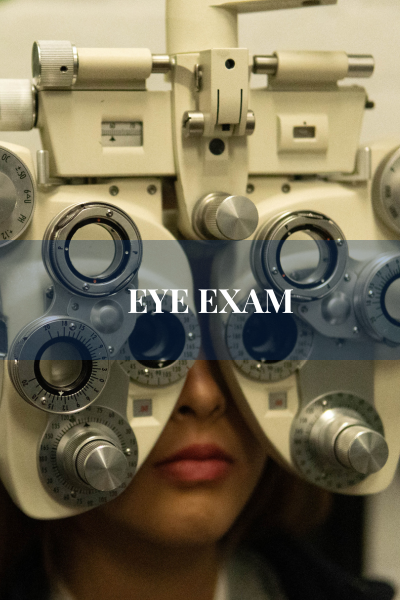
Testing may include visual acuity, refraction, pupil response, eye movement assessment, tonometry, visual field checks, and an eye health examination. Dilation may be recommended where clinically appropriate so the retina and optic nerve can be examined properly.
After that, the most useful part is often the explanation. Patients need to know what was found, what was ruled out, whether anything needs monitoring, and what action makes sense next. Sometimes that is a straightforward prescription update. Sometimes it is a referral. Sometimes it is a dispensing and fitting issue rather than a medical one.
In Surry Hills, close to Darlinghurst and the wider inner Sydney area, that joined-up approach is especially valuable for people who are tired of fragmented care. Eye exam, prescription comfort, frame adjustment, Asian fit modification, lens troubleshooting, and repair advice can sit within the same expert conversation.
When a comprehensive eye exam should lead to eyewear problem-solving
Not every complaint starts in the eye itself. A comprehensive eye exam may show that the eyes are healthy, yet the finished eyewear is still causing daily frustration. That is common with progressives, strong prescriptions, poor frame fit, incorrect lens positioning, or worn frames that no longer sit properly.
This is where LUNETTES ART LAB’s core difference becomes relevant. The studio is led by a Certified Artisan Lunetier, a MOF-certified handcrafted eyewear maker, a Certified Optical Dispenser in Australia, a Licensed Optician in South Korea, and a Certified Eyewear Stylist in the UK, with more than 10 years and 10,000 hands-on dispensing and repair cases behind the work. The value of that background is practical: it helps turn clinical information into glasses that people can actually wear comfortably.
That is also why WE DON’T SELL GLASSES is more than a slogan. The aim is not volume. The aim is solving the problem in front of the patient, whether that means a better lens plan, professional adjustment, an Asian fit nose pad modification on an existing designer frame, or a repair and restoration pathway for a frame worth keeping.
Who should book a comprehensive eye exam and how often
A good baseline matters for adults of any age, even when vision feels stable. People with symptoms, health risks, a family history of eye disease, or noticeable changes in sight should not wait longer than necessary.
General guidance often points to an eye test every two years, with more frequent reviews if advised by the practitioner. The right interval depends on your age, medical history, current eye health, and whether there is something being monitored.
A few situations deserve extra attention:
- Book sooner if: your vision has changed suddenly, one eye feels very different from the other, or reading and screen work have become noticeably harder
- Book sooner if: you have diabetes, a family history of glaucoma, or you have been told there are pressure or retinal concerns to watch
- Review your eyewear too if: your prescription is technically correct but your glasses cause strain, dizziness, red marks, slipping, or poor all-day comfort
- Do not assume it is minor if: you have been putting off an exam because you can still “get by”
Why expert fitting should follow a comprehensive eye exam
An accurate exam is the first half of the work. The second half is translating that information into comfortable daily vision.
That might mean checking whether the lens type suits the task, whether the optical centres are placed correctly, whether the frame sits level, or whether the bridge and nose pad design are right for the face. In practice, these details can be the difference between “the prescription is correct” and “I can finally wear these all day”.
This matters even more for complex prescriptions, progressives, and existing designer frames that were never a good fit to begin with. In Sydney, many people assume they need a whole new pair when the real issue is adjustment, modification, or dispensing accuracy. Quite often, expert hands can solve what retail turnover could not.
For people in Surry Hills, Darlinghurst, and greater Sydney who want a careful eye exam followed by serious eyewear problem-solving, a booked consultation is the better place to start.