Article: Why a Proper Eye Exam Matters Before You Choose New Glasses
Why a Proper Eye Exam Matters Before You Choose New Glasses
If you are planning to choose new glasses, the safest first step is an eye exam. An updated prescription, a check of eye health, and a proper conversation about how you actually use your vision can change which lenses will suit you best, whether that means single vision, occupational lenses, anti-fatigue lenses, multifocals, or prescription sunglasses.
At LUNETTES ART LAB in Surry Hills, Sydney, the goal is not to push a frame and hope it works later. The goal is to solve the reason you need new glasses in the first place, then match the prescription, lens design, fit, and frame to real daily wear.
By Ricky Lim, Certified Artisan Lunetier, MOF-certified handcrafted eyewear maker, Certified Optical Dispenser in Australia, Licensed Optician in South Korea, and Certified Eyewear Stylist in the UK with 10+ years and 10,000+ hands-on cases.
Why should an eye exam happen before you choose new glasses?
An eye exam should happen before you choose new glasses because glasses only work when the prescription is right, the lens type suits your tasks, and there is no hidden eye issue affecting comfort or clarity.
That sounds obvious, but many people still start with style, lens extras, or their old script. Then the new pair arrives, and something feels off. Reading is harder than expected. Night driving is still uncomfortable. Screen work is tiring by 3 pm. The glasses are technically new, but not truly right.

A proper eye exam can check visual acuity, refractive error, astigmatism, binocular function, and general eye health. Australian guidance from Healthdirect notes that regular eye tests can also help detect problems such as glaucoma, cataract, and macular degeneration early, sometimes before you notice symptoms yourself. That matters because not every blur or ache is solved by simply increasing lens power.
At LUNETTES ART LAB, eye examinations are conducted by a registered optometrist on site, then carried through to lens dispensing and fitting in the same studio. That handover matters. It means the exam result is not treated as a number on paper. It becomes part of a full plan for how you will wear the glasses in real life.
What symptoms suggest you need an eye exam before new glasses?
Symptoms are often the first clue that your current glasses are no longer doing the job, or that your eyes need a different lens design rather than a stronger version of the same thing.
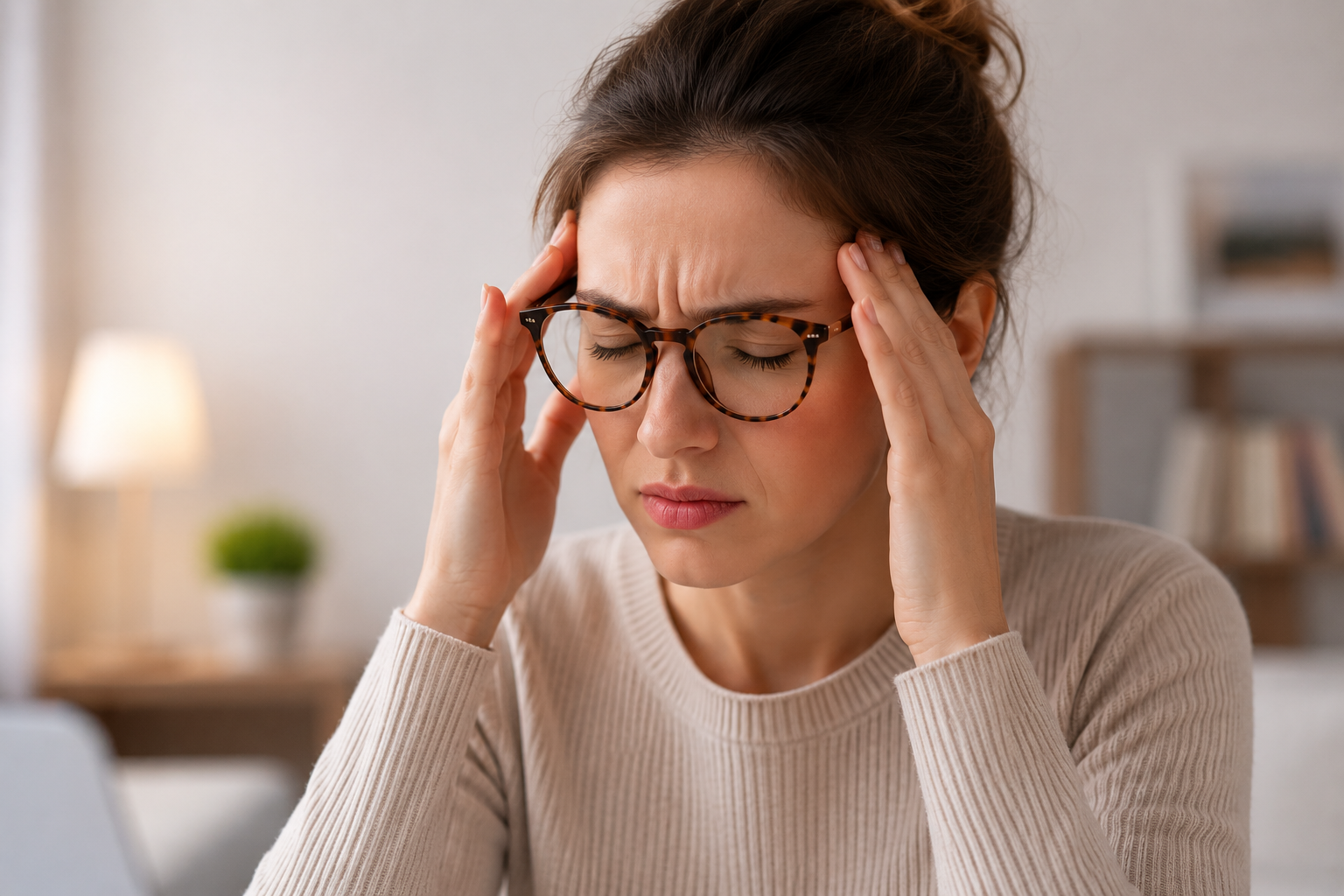
People commonly come in thinking they “just need new frames”, when the real issue is strain, unstable focus, or a change in near vision. Computer use can make these issues feel worse. Better Health Channel notes that sore or tired eyes, blurred vision, and headaches can all show up with screen-heavy work, especially when an uncorrected vision problem is sitting underneath it.
Signs worth paying attention to include:
- Blurry near vision late in the day
- Trouble shifting focus from laptop to distance
- Eye strain during reading or spreadsheets
- Night driving discomfort: glare, halos, or road signs that seem slower to sharpen
- Current glasses feel wrong: headaches, pressure, or the need to tip your chin to find a clear spot
- Screen fatigue: tired eyes, intermittent blur, or losing concentration sooner than usual
One symptom on its own does not tell you which lens to choose. An eye exam helps separate prescription change, focusing demand, eye health, and lens design issues.
What can an eye exam reveal about prescription changes and eye health?
An eye exam can reveal whether your vision problem is mainly refractive, partly task-based, or linked to a broader eye health concern that needs attention.
A prescription change is the most familiar finding. Short-sightedness, long-sightedness, astigmatism, and age-related near vision changes can all alter what you need in glasses. Astigmatism, in particular, can show up as trouble focusing, headaches, eyestrain, and difficulty seeing clearly at night. That is one reason people often struggle with night driving long before they realise their script has changed.
An eye exam can also reveal why your old glasses no longer feel comfortable even if they were once fine. Your visual demands may have changed. A person working between dual screens, a phone, printed notes, and distance viewing all day does not use vision the same way as someone who mainly drives or reads.
Then there is the health side. Regular eye tests can identify early signs of conditions that may not be obvious to you yet. That does not mean every symptom is serious, but it does mean guessing is a poor strategy.
Here is a practical way to think about it:
|
Symptom you notice |
What an eye exam may check |
Lens or eyewear path that may suit |
|---|---|---|
|
Blurred distance vision |
Updated distance prescription, astigmatism |
Single vision distance lenses |
|
Blurry near vision after 40 |
Reading demand, near prescription change |
Reading glasses, occupational lenses, multifocals |
|
Screen fatigue and headaches |
Prescription accuracy, focusing strain, visual habits |
Anti-fatigue lenses, occupational lenses |
|
Night glare and halos |
Astigmatism, prescription change, eye health, pupil behaviour |
Updated prescription, personalised lenses, prescription sunglasses |
|
Current progressives feel hard to use |
Prescription, fitting position, visual behaviour |
Refit, new multifocals, behaviour-based lens pathway |
|
Sunglasses no longer feel clear |
Outdated script, lens wear, changing needs |
Prescription sunglass lens replacement |
How does an eye exam guide the right lens type?
An eye exam guides the right lens type by showing not just how clearly you can see on a chart, but where and when your vision becomes effortful.
That is why lens choice should not be separated from the exam result. A person can have a correct prescription and still end up in the wrong lens category.
How does an eye exam guide single vision and anti-fatigue lenses?
Single vision lenses suit people who need one main correction distance, usually far or near. That sounds simple, but the exam still matters because small prescription changes can have a large effect on comfort, especially for screen-heavy workers or people with astigmatism.
Anti-fatigue lenses can be a better option when the issue is not pure distance blur but end-of-day strain, mild near support needs, or constant shifting between devices. These lenses add gentle help for near and intermediate tasks. They are often useful for younger adults who are not ready for multifocals but are clearly working hard to keep focus stable through the day.
How does an eye exam guide occupational lenses and multifocals?
Occupational lenses are designed for work distances, usually screen and desk ranges. They are often a better match than standard progressives when your day is mostly computer, conversation, paperwork, and room-distance viewing.
Multifocals are different. They are built for multiple distances in one lens, but they only perform well when the prescription, fitting height, pupillary distance, frame position, and wearer behaviour all match. If adaptation has been difficult in the past, the answer is not always “try again”. Sometimes the lens design was wrong for your actual routine.
How does an eye exam guide prescription sunglasses?
Prescription sunglasses should follow the same logic as clear glasses. If your script is old, the sunglass will be old the moment it is made.
That matters more than people expect. Driving, beach glare, sport, and bright Sydney afternoons all put extra demand on contrast and comfort. An eye exam helps confirm whether you need updated power, polarised options, tint changes, or a different frame shape to hold the lenses in the correct position.
If you already own a frame you love, LUNETTES ART LAB also offers prescription lens replacement for existing designer frames and sunglasses, including fashion frames that were never dispensed properly for your prescription the first time.
If you want to start with the proper first step, you can book an eye exam here: https://lunettesartgroup.simplybook.net/v2/
When is a standard eye exam not enough for new glasses?
A standard eye exam is essential, but some people need more than a standard prescription check when their symptoms are more specific or their lens history has been frustrating.
At LUNETTES ART LAB, that is where the Vision Personalisation Studio can become useful. The Vision Personalisation Studio is a measurement-led service that adds biometric eye measurement and behaviour analysis to a standard prescription.
Rodenstock DNEye Scanner is the Eye layer. It captures more than 7,000 measurement points to build an individual eye model, which can be useful for people with strong prescriptions, persistent night glare, or vision that never feels crisply resolved in ordinary lenses.
Stepper OPTI AI is the Behaviour layer. It looks at how you move your eyes and head, which matters for screen-heavy work, occupational use, and people who have struggled to adapt to progressive lenses before.
Not everyone needs that level of personalisation. Some do. The eye exam is what tells you which path makes sense.
Why can updated glasses still feel wrong after the eye exam?
Updated glasses can still feel wrong when the lens dispensing and frame fitting do not carry the prescription accurately into the finished pair.
This is the part many people miss. A prescription is not the final product. It is the starting data. If the optical centres sit in the wrong place, if the frame slides, if the multifocal corridor is set too high or too low, or if the frame shape is unsuitable for the lens design, you can still end up uncomfortable.
At LUNETTES ART LAB, the exam result is followed by dispensing consultation, frame selection with fit in mind, and precise adjustment. In-house lens edging also helps keep control over where the optical centres land in the finished lenses. For people around Surry Hills, Darlinghurst, and the Sydney CBD who have had glasses that were “correct but never comfortable”, this is often where the real fix happens.
A good eye exam answers what your eyes need. Good dispensing and fitting answer how that need becomes wearable all day.
What should you bring to an eye exam before getting new glasses?
Bring your current glasses, any recent prescriptions you have, and a clear picture of what is bothering you.
That last point matters more than most people realise.
- Current pair: helps compare old and new measurements, fit, and wear patterns
- Work habits: laptop use, reading time, driving, studio work, outdoor use
- Short notes about symptoms
- Older unused glasses: useful if a previous pair felt better, or worse, than the current one
A short, specific description is often enough. “Fine in the morning, blurry by late afternoon on spreadsheets” is more useful than “my eyes are a bit tired”.
FAQ about eye exams before choosing new glasses
Do I need an eye exam if I only want new frames?
Yes, an eye exam is still worth having if your lenses will be updated or remade. A new frame changes lens position on your face, and even a small prescription change can affect comfort, especially with multifocals, occupational lenses, or higher prescriptions.
Can headaches mean I need new glasses?
Headaches can be linked to a prescription issue, focusing strain, astigmatism, or glasses that no longer suit your daily tasks. Headaches can also have causes unrelated to glasses, which is why an eye exam is the right first check before choosing lenses.
Why are screens harder to handle even though my current glasses are recent?
Screen fatigue can happen even with a fairly recent prescription if the lens design is wrong for your working distance, your near support needs have changed, or your eyes are working harder to maintain focus. An eye exam and dispensing review can help separate those causes.
Should I get an eye exam before replacing lenses in my existing designer frame?
Yes. Prescription lens replacement works best when the current script is confirmed first. That is especially true for prescription sunglasses, multifocals, and fashion frames that sit differently from standard optical frames.
Can an eye exam help if I struggle with night driving?
Yes. Night driving discomfort can be linked to astigmatism, prescription change, lens wear, glare sensitivity, or other eye factors. An eye exam is the best place to start, and some people may benefit from more personalised lens planning after that.
How often should I have an eye exam before updating glasses?
That depends on your age, symptoms, prescription history, and eye health risk factors. A registered optometrist can advise the right interval for you, but if your vision feels different, your glasses are harder to use, or you are choosing new lenses now, it is sensible to book rather than guess.
For people in Surry Hills, Darlinghurst, and wider Sydney, the most useful way to buy glasses is to start with the eyes, then build the lenses and fit around what the exam shows. If you want measured advice before choosing your next pair, you can book an eye exam here: https://lunettesartgroup.simplybook.net/v2/

Written by Ricky Lim