

Why New Glasses Can Cause Headaches, Even When the Prescription Is Right
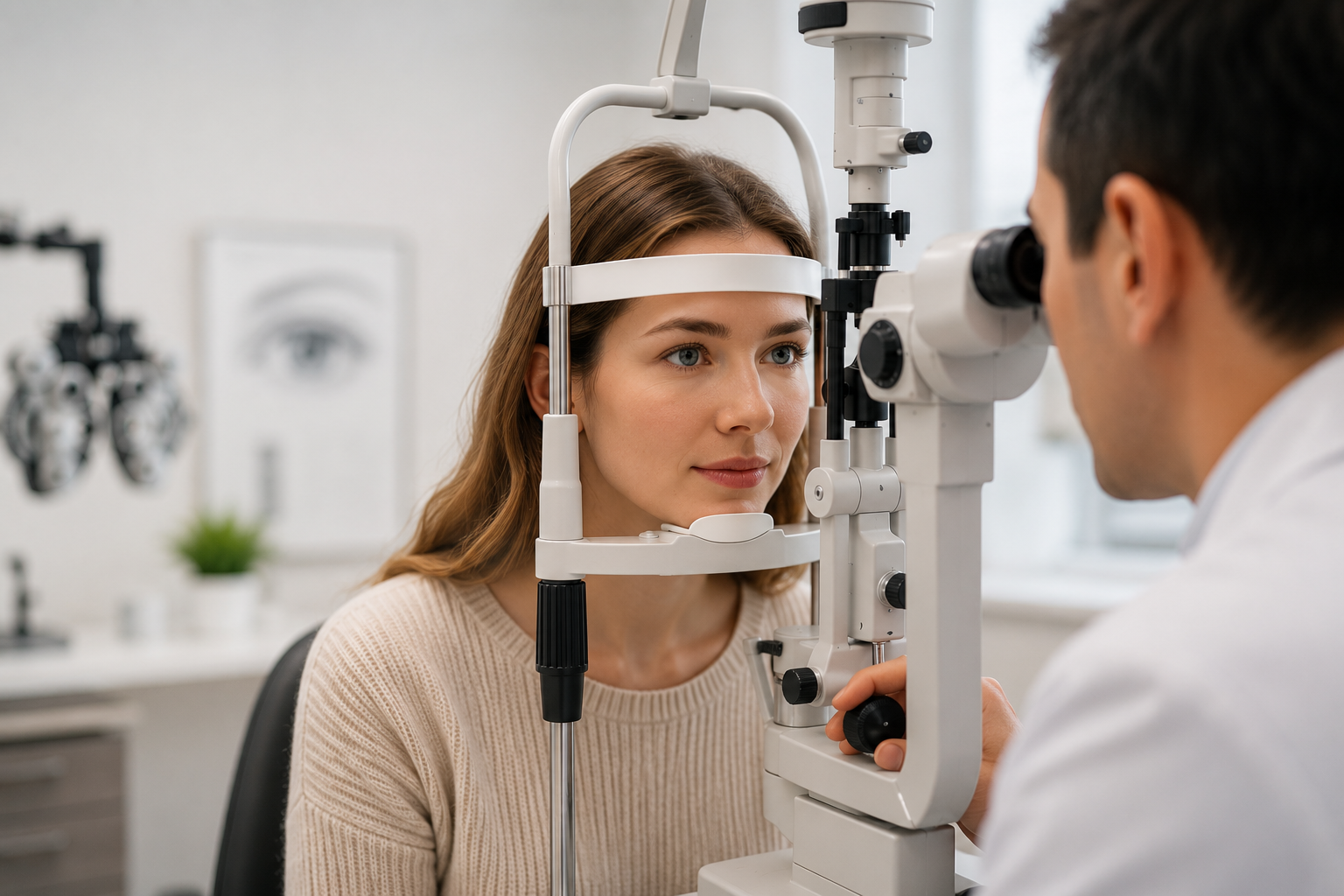
Yes, new glasses can cause headaches even when the prescription is correct. In most cases, the problem is not the numbers on the script itself, but the adjustment period, the way the lenses were built, the frame fit, or how your eyes and posture behave through the day.
A correct prescription still has to be delivered properly. If the frame sits in the wrong place, the optical centres are off, or the lens design does not suit the way you read, drive, or switch between screens, your eyes can work harder than they should.
By Ricky Lim, Certified Artisan Lunetier, MOF-certified handcrafted eyewear maker, Certified Optical Dispenser in Australia, Licensed Optician in South Korea, and Certified Eyewear Stylist in the UK with 10+ years and 10,000+ hands-on dispensing and repair cases.
Why can new glasses cause headaches when the prescription is right?
New glasses change how light reaches your eyes, and your brain needs a little time to settle into that change. That is why some people notice headaches, eye strain, mild blur, distortion at the edges, or a slightly “off” feeling in the first few days.
Most people feel better within a few days. Some take up to one to two weeks, especially with first-time glasses, progressive lenses, stronger scripts, high astigmatism, or bigger changes to long-sighted correction.

The key point is simple: correct does not always mean instantly comfortable.
|
Symptom with new glasses |
Common reason |
Often settles on its own? |
When to check it |
|---|---|---|---|
|
Mild headache after a few hours |
Normal adaptation to new power or lens shape |
Yes |
If still present after 1 to 2 weeks |
|
Eye strain at the computer |
Near or intermediate zone not matched to work habits |
Sometimes |
If it happens daily |
|
Pressure on nose or behind ears |
Frame fit problem |
No |
Check as soon as possible |
|
Blur at the edges |
Lens design adaptation, often with progressives |
Often |
If central vision also feels wrong |
|
Feeling tilted or “swim” |
Progressive adaptation or lens centring issue |
Sometimes |
If severe or persistent |
|
Headache with reading |
Accommodation or binocular stress |
Sometimes |
Eye exam if recurring |
Which prescriptions and lens types are more likely to trigger headaches?
Some changes ask more of the visual system than others. That does not mean the glasses are wrong. It means the adaptation load is higher.
Progressive lenses are a common example. A progressive gives distance, intermediate, and near vision in one lens, so the wearer has to learn where each zone sits. If the design does not match real eye movement and head posture, headaches and neck tension can follow.
High astigmatism changes can also feel dramatic. Even when the cylinder power and axis are accurate, the image can look sharper but less familiar at first. The same applies to prism changes, first-time reading correction, and stronger hyperopic prescriptions.
After seeing many dispensing cases in Surry Hills and Sydney, a few patterns come up again and again:
- Progressive lenses: adaptation can take longer because the wearer is learning multiple viewing zones
- High astigmatism: image orientation changes can feel intense in the first days
- Prism changes: the eyes need time to work together differently
- First pair of glasses
- Big prescription shift
- Heavy screen users
When is the headache really a frame fit problem?
A surprising number of “prescription headaches” are actually fitting headaches. If the frame slides down, sits crooked, pinches at the temples, or rests unevenly on the nose, you are not consistently looking through the intended part of the lens.
That matters even more with multifocals, strong scripts, and office lenses. The frame is the delivery system for the prescription. If the delivery system moves, the vision moves with it.
At Lunettes Art Lab in Surry Hills, this is why fitting is treated as part of the vision solution, not an optional extra after the glasses arrive. The job is not finished when the lenses are inserted. Final alignment to the face is what turns a technically correct pair into something wearable for a full day.
Signs that point more to fit than to prescription include:
- Sliding frame: your vision feels better when you push the glasses back up
- Red marks: the nose pads or bridge are carrying pressure unevenly
- Sore behind ears: temple tension is too high or the bend is wrong
- Crooked fit: one lens sits closer to the eye than the other
- Headache that builds as the frame shifts through the day
If that sounds familiar, a dispensing check or fitting consultation is often the fastest place to start.
Book a 1:1 dispensing or fitting consultation
How can lens measurements and lens build cause headaches?
Even with a correct eye test, small build errors can create big comfort problems. Pupillary distance, fitting height, back vertex distance, pantoscopic tilt, and face wrap all influence where you actually look through the lens.
If those measurements are off, the prescription can feel “pulling”, tiring, or strangely inaccurate even when the lab has followed the written script exactly.
This is especially relevant for:
- progressive lenses
- occupational lenses
- strong minus or plus prescriptions
- prescription lens replacement in existing fashion frames
- frames with low bridges or unstable fit
A common real-life case is the person who already owns a designer frame and wants prescription lenses put into it. The frame may look great, but if it sits too low, too wide, or too far from the face, the finished result can produce strain. That is why lens replacement needs proper assessment, not just reglazing by formula.
In-house lens edging also matters. When the optical centre placement is controlled close to the fitting process, there is less room for the measurements to get lost between consultation and final build.
What if the headache is coming from how you use your eyes all day?
Some people have a correct prescription and a well-fitted frame, yet they still struggle. In those cases, the missing piece can be visual behaviour.
Two people with the same script can use their eyes very differently. One person may spend ten hours switching between dual monitors, a phone, and a meeting room. Another may drive at night, read for long blocks, and barely use a computer. A generic lens design does not always suit both.
Lunettes Art Lab’s Vision Personalisation Studio in Sydney looks at this through an Eye plus Behaviour plus Fit approach.
The two main tools are useful in different ways:
- Rodenstock DNEye Scanner: a 7,000-point biometric eye scan that measures the physical eye in high precision, useful for complex prescriptions, night glare, and people who never feel their lenses are truly crisp
- Stepper OPTI AI: a behaviour-based assessment that looks at eye movement patterns and visual habits, useful for progressive adaptation, screen-heavy work, and people who keep getting headaches with “correct” glasses
This is not about selling a fancy machine result. It is about finding out why standard glasses keep disappointing you.
What should you do in the first week with new glasses?
Give your eyes a fair chance to adapt, but do it deliberately. Wearing the glasses for short, regular periods is often more useful than putting them on once, feeling annoyed, and abandoning them in a drawer.
A few habits help during the first several days:
- Wear them consistently: short daily wear can slow adaptation more than steady use
- Start in familiar settings: home, office, reading desk, and local walking routes are easier than starting with a long drive
- Check screen setup: if your monitor is too high or too close, even good lenses can feel tiring
- Notice the timing: headaches after 20 minutes suggest a different issue from headaches after 8 hours
- Do not self-adjust the frame: bending it by hand often makes centring worse
If you are adapting to progressives, point your nose more toward what you want to see instead of only moving your eyes into the lens edges. That reduces the feeling of “swim” while your brain learns the design.
When should you stop waiting and book a check?
If symptoms are getting milder each day, that is reassuring. If the headache is unchanged, getting worse, or still present beyond about one to two weeks, it should be checked.
Do not wait long if the glasses cause strong nausea, double vision, one-sided blur, severe dizziness, or headaches that start immediately every single time you put them on.
Persistent symptoms can point to a few different causes:
- Prescription comfort issue: the script may be technically right in the exam room but not right in real use
- Binocular vision problem: the eyes may be struggling to work together, especially at near
- Lens design mismatch: common with progressives, office lenses, and heavy digital use
- Fit and alignment issue: a frame sitting incorrectly can shift the optical centre all day
- Outdated baseline exam: if your symptoms changed after the test, the prescription may need review
Eye strain related to close work is sometimes described as asthenopia, which simply means visual fatigue from eye use. If your headaches show up mainly with reading, screens, or detailed work, an eye exam and dispensing review are both worth considering.
In Surry Hills and nearby Darlinghurst, the most sensible path is usually not “replace everything and hope”. It is a 1:1 check to work out whether the problem sits in the eye exam, the lens design, the measurements, or the frame.
How does this apply to screen fatigue and office work?
Screen users often blame the new glasses when the real issue is the task distance. A standard single-vision pair may be fine for walking around and poor for a two-monitor desk. A general progressive may be acceptable for daily life but inefficient for long blocks of near and intermediate work.
That mismatch shows up as forehead ache, tired eyes, shoulder tension, and the habit of pushing your chin up or down to find a clearer zone.
If headaches mainly appear at work, office-specific lenses, anti-fatigue lenses, or a behaviour-based lens assessment may be more useful than remaking the same lens again.
FAQ about headaches from new glasses
How long should headaches last after new glasses?
Mild headaches often settle within a few days. Some people, especially progressive wearers or those with stronger prescription changes, may take up to one to two weeks.
Should I keep wearing new glasses if they give me a headache?
If the symptoms are mild and gradually improving, steady wear is usually reasonable. If the headache is strong, unchanged, or paired with dizziness, double vision, or nausea, book a check rather than pushing through.
Can progressive lenses cause headaches even when they are made correctly?
Yes. Progressives can cause temporary strain during adaptation, and they can also cause ongoing discomfort if the lens design, fitting height, or frame position does not suit how you use your eyes.
Can a crooked frame really cause headaches?
Yes. A crooked or slipping frame can shift you away from the intended optical centre, which may create strain even when the prescription itself is accurate.
What if my new glasses are only uncomfortable at the computer?
That often points to a task-distance problem rather than a wrong prescription. Office lenses, anti-fatigue lenses, or a behaviour-based assessment may be more suitable than standard everyday lenses.
When do I need an eye exam rather than just an adjustment?
If symptoms persist beyond one to two weeks, keep recurring, or include blur, double vision, strong eye strain, or night driving trouble, an eye exam is sensible. Personal advice should come from a registered optometrist or qualified optical dispenser after proper assessment.
If your new glasses are giving you headaches, the next step is not guesswork. A careful 1:1 review can sort out whether the issue is adaptation, fit, lens build, screen use, or a prescription comfort problem.
Book a 1:1 dispensing consultation, fitting consultation, or eye exam

Written by Ricky Lim