
Article: Personalised Vision Scan vs a Standard Eye Test in Sydney
Personalised Vision Scan vs a Standard Eye Test in Sydney
Yes, a Personalised Vision Scan can be worth considering if multifocal glasses feel difficult, your prescription is higher, or screens and near tasks dominate your day. It does not replace a comprehensive eye examination: a standard eye test remains the starting point for checking vision and eye health. At Lunettes Art Lab, we consider the issue as part of what a comprehensive eye exam can reveal, then discuss whether additional lens measurements are useful for you.
If your glasses are comfortable and you need a routine prescription and eye health check, a standard examination may be enough. The distinction is scope: a usual examination checks vision and eye health, while a Personalised Vision Scan adds measurements that can inform compatible lens designs. Neither tells the whole story without understanding how you use your glasses during the day.
What does a standard eye test check?
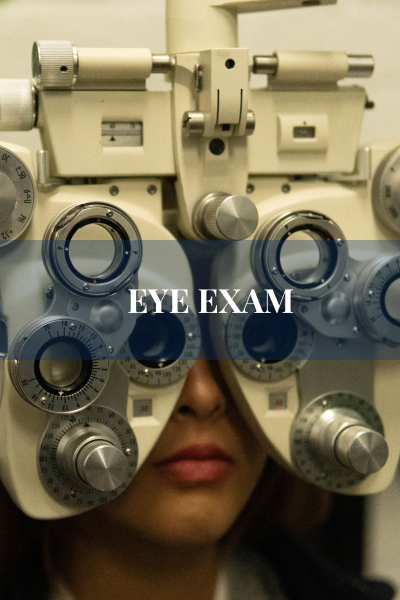
A standard eye test is not just reading letters on a chart. Your optometrist asks about your vision and health, checks how clearly you see at different distances, and assesses whether a prescription could help. Depending on your needs, the examination can also include checks of the front and back of your eyes. Healthdirect’s eye test overview describes these common elements and explains that additional tests depend on a person’s health and risks.
Some examinations also assess eye movements, coordination or pressure inside the eye. These are useful clinical checks, but they are not the same as measuring where a lens sits in a frame or observing how you move your head and eyes between everyday tasks.
If you notice sudden vision changes, eye pain, flashes or new floaters, contact an optometrist or GP promptly rather than waiting for a routine appointment.
What might a standard eye test not measure?
A prescription describes the lens power needed to correct your vision. It does not, by itself, describe the exact position of a lens in a particular frame, how you move between a screen and a document, or the working distances you use throughout the day.
Routine eye examinations can include different checks according to the person and the clinical reason for testing. For example, Better Health Channel’s eye test guidance lists eye movement and pressure checks among possible examination components. Those clinical checks are distinct from a VR-based assessment of visual behaviour during simulated tasks, or measurements taken to guide lens positioning in a chosen frame.
That distinction matters when your glasses feel wrong even though the prescription seems right. A comprehensive eye examination can assess your vision and eye health; discussing your normal screen, reading and distance tasks adds context for selecting lenses. Frame measurements address another question: whether the lenses can be positioned appropriately in the frame you choose.
Is a personalised vision scan in Sydney worth it over a standard eye test?
It can be worthwhile when you need more than a routine prescription check, especially if you wear multifocal glasses, have a higher prescription, spend much of the day on screens, or have never found glasses that feel right. These are reasons to discuss additional measurements, not a guarantee that a particular lens will solve every concern.
At Lunettes Art Lab in Surry Hills, Sydney, our optometrists include a Personalised Vision Scan with a comprehensive eye examination at no additional charge. It includes Rodenstock DNEye biometric eye measurement and a VR-based Behavioural Eye Movement Scan. The measurements can inform their respective compatible lens designs, rather than automatically applying to every lens.
The scan complements the examination. It does not replace the optometrist’s assessment of your vision and eye health, or a conversation about what you need your glasses to do. We ask about the distances you use for screens, reading and other daily tasks, then consider that information alongside your prescription and relevant measurements.
Research on measurement technology should be interpreted within its scope. A 2023 study compared smartphone 3D head scanning for ordering glasses with other methods in 30 adults with presbyopia. It examined a particular head-scanning approach, not the Personalised Vision Scan described here, so it does not establish that every scan improves comfort.
If you want to understand how a behaviour-based assessment may relate to multifocal lenses, read a behaviour-based vision assessment for multifocals.
When is a standard eye test enough?
A standard eye test may be all you need if your current glasses work comfortably, your vision feels stable and you are seeking a routine check of your prescription and eye health. Extra lens measurements are not automatically necessary just because they are available.
If you have a particular problem, describe it in practical terms: for example, “I struggle to switch from my laptop to a colleague across the desk,” or “I have to move my head to find a clear area in my multifocal glasses.” Those details help your optometrist decide whether the issue relates to your prescription, lens design, frame position or the way you use your vision.
Fit and optics are connected because a frame that slips or tilts can move a lens away from its measured position. Our measurement-led Lunettes Fittingology method, led by Ricky Lim, Eyewear Frame Fitting Expert, follows an order of basic fitting, precision fitting and a pull test. For fit concerns, explore the eye test in Surry Hills page for more information about our local practice.
Book a comprehensive eye examination in Surry Hills
If multifocal glasses, screen work or an uncomfortable prescription are making daily vision harder, a comprehensive eye examination can help identify what deserves attention. Our optometrists can discuss whether the included Personalised Vision Scan is relevant to your needs.
Book a comprehensive eye examination with a Personalised Vision Scan. What we do differently: our optometrists assess vision and eye health; we use relevant face and frame measurements to guide lens positioning, edge lenses in our in-house lab and make a final in-person adjustment. What you gain, and what it costs to leave it: a clearer basis for deciding whether prescription, lens design or frame position needs attention. If the cause is not addressed, screen work and switching between near and far tasks can often remain frustrating, and glasses can continue to feel uncomfortable. Lunettes Art Lab, 249 Riley Street, Surry Hills NSW 2010, Sydney. Phone (02) 8385 4996. lunettesartlab.com.
Frequently Asked Questions
Does a Personalised Vision Scan replace an eye test?
No. It is included with a comprehensive eye examination, but it does not replace the optometrist’s assessment of your vision and eye health. Its measurements can inform compatible lens designs.
Who is most likely to benefit from the scan?
It may be particularly relevant if you wear multifocal glasses, have a higher prescription, use screens for much of the day or have not felt comfortable in your glasses. Your optometrist can discuss whether the measurements suit your needs.
Is a standard eye test enough if my glasses feel fine?
Often, yes. If your glasses are comfortable and you need a routine prescription and eye health check, a standard examination may be sufficient.
Does a standard eye test check how my glasses fit?
An eye examination checks vision and eye health, while frame position and lens placement are fitting considerations. If your glasses slip or sit unevenly, mention this so the optometrist can advise whether a fitting assessment is also appropriate.
Can a scan guarantee that multifocal glasses will feel comfortable?
No scan can guarantee comfort or adaptation. The measurements can inform compatible lens designs, while your prescription, frame, fitting and everyday visual needs also matter.

Written by Ricky Lim