

Sound familiar?
The questions that bring people here
These are the three things we hear most often in the studio.
Each one has a measurable cause, and each one is exactly what the Personalised Vision Scan was built to find.

Why do my new glasses give me headaches, even though the prescription is right?
A correct prescription can still sit wrongly in front of your eyes. Frame fit, lens position and the way you hold your head all change what your eyes receive. The scan finds the mismatch.
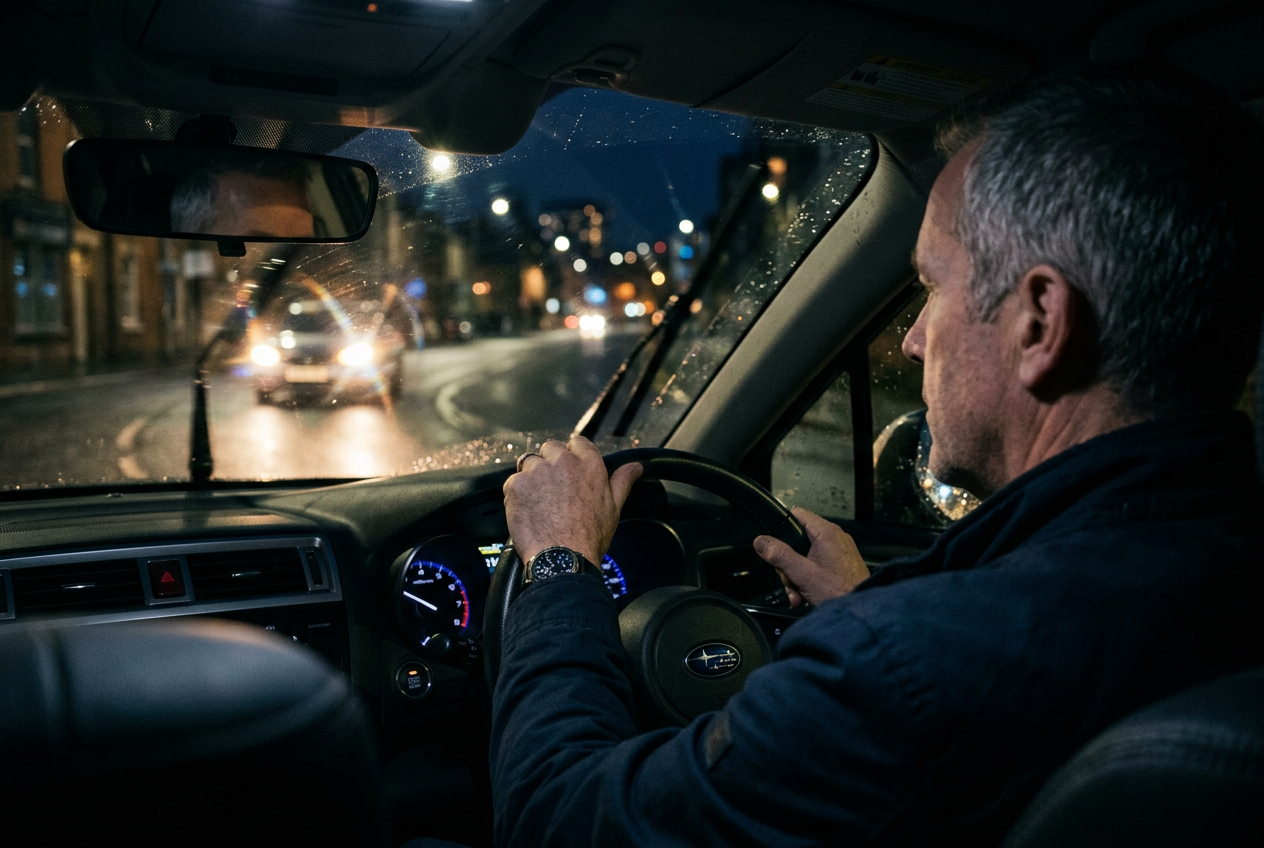
Why is night driving getting harder after 45?
Standard prescriptions are measured in bright rooms with an average eye model. Low light exposes what an average model misses. Biometric measurement reveals what standard testing cannot.

Why do my progressive lenses never feel quite right?
Progressives are unforgiving. Small errors in fitting height, posture assumptions or corridor choice compound into daily discomfort. Behavioural data takes the guesswork out.
Personalised Vision Scan
Two ways of understanding your vision
A standard eye test measures the prescription you need. Our Personalised Vision Scan looks further at how your eyes are built and how you naturally use your vision.
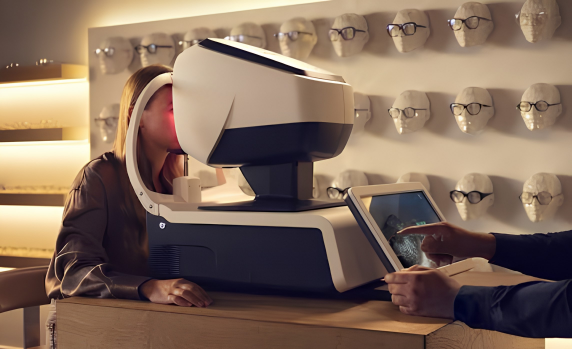
Biometric Scan
How your eyes are built
DNEye® measures the unique biometrics of each eye to support a more individualised Rodenstock lens calculation.
The scanner captures over 7,000 data points per eye: axial length, corneal topography, day and night pupil size, and the higher-order aberrations a standard refraction cannot detect. These become 80+ parameters in a biometric model of your eye, calculated directly into your lenses.
Ideal for: Night-driving difficulties, reduced contrast, complex prescriptions, and persistent glare after LASIK or LASEK.
BEHAVIOURAL SCAN
How you use your vision
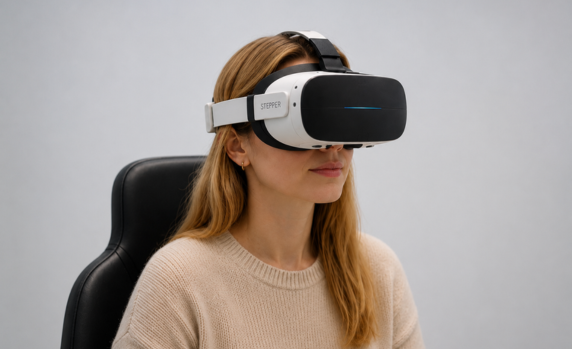
OPTI AI analyses your natural eye movements and visual habits to personalise your progressive lens design.
A VR-based assessment recreates real-life scenarios and observes how you naturally shift focus: whether you move your eyes or turn your head, and where your vision rests during screen work, reading and movement. The AI then calculates the corridor and inset values that match your habits.
Ideal for: multifocal difficulties, screen use and active lifestyles.