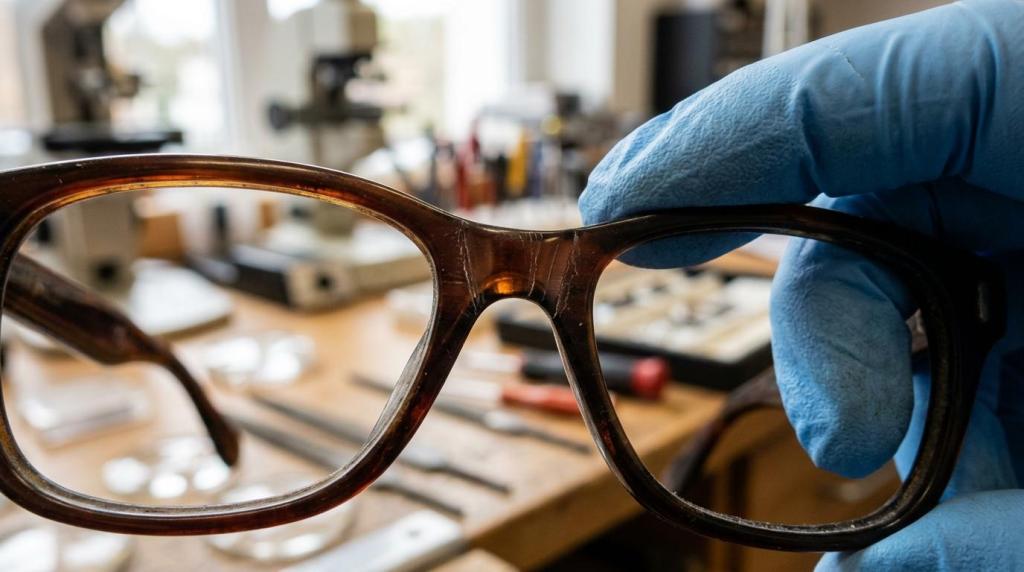
How Eyewear Repair Compares With Full Frame Repair
If your spectacles are damaged, it’s important to understand that eyewear repair and full frame repair are not the same. A simple eyewear repair might address issues like a loose screw, a misaligned temple, or a minor adjustment. In contrast, full frame repair involves restoring the structural integrity of the entire frame, ensuring it can securely hold its lenses or accommodate new ones.
Many people request “repair” when their glasses have multiple issues—scratched lenses, a stressed bridge, or a frame that no longer sits straight after years of use. In these situations, a quick fix may not be the safest or most effective solution. Instead, a thorough inspection is essential to determine what can be repaired, what might need restoration, and what should be replaced entirely. This careful assessment helps ensure your eyewear remains safe, functional, and comfortable for everyday use.
How does eyewear repair compare with full frame repair?
Eyewear repair is narrower than full frame repair: reglazing keeps your existing Ray-Ban or Prada frame, while full frame repair addresses the structure itself, from bent temples to cracked acetate fronts.
Think of eyewear repair as the umbrella term people use for almost everything. In practice, professionals usually separate the work into categories. A minor repair might mean tightening screws, replacing nose pads, adjusting temple spread, or straightening a bent metal bridge. Full frame repair goes further. It can involve reshaping plastic or metal, stabilising a break, replacing small parts, correcting frame memory loss, or restoring an older frame so it can be worn safely again.

The key trade-off is risk. The more structural the job, the more important material condition becomes. An older acetate frame may look intact but carry internal stress. A metal frame may be repairable at the hinge but no longer stable enough to hold a new lens securely.
Can you replace lenses in existing frames?
Yes, existing frames can often be reglazed, but brands like Oakley and Prada do not guarantee every frame is eligible for replacement lenses.
This is one of the biggest misconceptions in optical repair. People often assume that if a frame is still wearable, it can always take new lenses. That is not true. Expert sources note that not all frames qualify, and some can break during lens removal or insertion because of tiny cracks that develop over time.
A practical assessment usually checks four things. First, is the frame structurally sound enough to survive lens removal? Second, is the lens shape and groove condition still usable? Third, is the prescription suitable for that frame size and wrap? Fourth, are replacement parts or original specifications still available if something goes wrong?
If the answer to any of those is no, the safer path may be full frame repair first, or replacing the frame rather than forcing a reglaze.
“LUNETTES ART LAB has offered eyewear repair services since 2011, with in-house aftercare that includes repairs and full restorations.”
What are the most common eyewear repair jobs people book?
The most common jobs are practical, not cosmetic: crooked spectacles, loose hinges, broken acetate, worn nose pads and reglazing requests.
Most booked repair work falls into a small number of repeat problems:
- LUNETTES ART LAB 1:1 repair assessments: fit check, frame risk review and restoration scope before work starts.
- Temple and hinge correction: bent arms, spread adjustment, hinge alignment, screw replacement.
- Nose pad and bridge work: worn pads, slipping fit, low bridge comfort changes, pad arm adjustment.
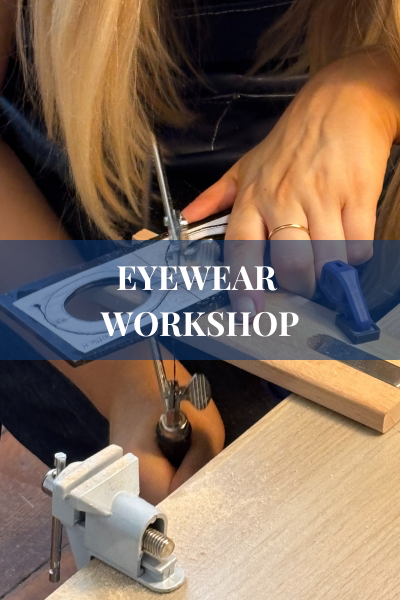
- Acetate frame restoration: warped fronts, dried acetate, polishing, structural rebalancing.
- Metal frame reshaping: bent bridges, twisted eyewires, temple straightening.
- Lens replacement or reglazing: scratched, chipped or outdated lenses in eligible frames.
The list tells you something important. Many “repairs” are actually comfort and geometry problems. If the spectacles sit badly, they can feel broken even when no part has snapped.
How do metal frame repairs compare with acetate frame repairs?
Metal and acetate need different repair logic: titanium and stainless steel can often be reshaped, while acetate repairs depend more on age, stress history and material condition.
Metal frames usually tolerate precise reshaping better than brittle plastics, but not all metals behave the same way. Memory metals can spring back. Soft alloys can distort. Soldered joints may become weak after impact. Acetate offers more restoration options for fit and finish, yet old acetate can shrink, craze or crack when stressed.
A common misconception is that acetate is always easier because it can be heated. Heat helps with adjustment, but it does not erase structural fatigue. If an acetate frame has hidden cracks around the bridge or lens groove, heating and reglazing can expose them very quickly.
When comparing the two, ask a simple if-then question. If the problem is alignment only, both materials may respond well. If the problem is structural, the material’s age and stress pattern matter more than brand or price.
How do you check frame eligibility before reglazing?
Frame eligibility is assessed before any lens order: the optician inspects bridge stress, hinge stability, groove wear and lens removal risk on the actual frame.
Step 1 is visual inspection. The frame front, end pieces, hinges and lens rims are checked for chips, warping, whitening, stress lines or previous repairs. A frame that looks “fine” under room light can still show early cracking when flexed.
Step 2 is compatibility review. The prescription, pupillary distance, fitting height and lens thickness are matched to the frame shape and size. If the lens power is strong and the frame is too large or too wrapped, the result may be heavy, thick or optically uncomfortable.
Step 3 is risk discussion. This is where a careful practice differs from retail volume. The wearer should be told that older or apparently intact frames can still break during the glazing process. That is not poor workmanship by default. It is a known material risk.
“LUNETTES ART LAB reports more than 10,000 eyewear fitting and repair issues solved, which matters when an older frame may crack during lens removal.”
When is a full frame restoration safer than a simple repair?
Full frame restoration is safer when the frame has multiple faults: a cracked bridge, distorted hinges, dry acetate or chronic misalignment after impact.
A simple repair fixes one failure point. Restoration looks at the whole object. That distinction matters with designer and vintage eyewear, where one visible break often sits alongside hidden wear.
Typical signs that push a job from minor repair into restoration include:
- Repeated misalignment: the frame straightens briefly, then twists back out of balance.
- Material fatigue: acetate whitening, shrinking, cracking, or metal that has work-hardened.
- Compound damage: broken hinge plus lens groove wear plus bridge stress.
- High sentimental or brand value: vintage frames, discontinued models, or a favourite daily pair.
Pro tip: if your frame has already been glued at home, say so immediately. Adhesives can complicate professional repair and change whether restoration is still feasible.
How should you prepare your spectacles before a repair consultation?
Bring the whole problem, not just the frame: spectacles, current prescription, old lenses, case and any broken parts all help the repair decision.
Step 1 is to stop forcing the frame. Do not keep bending an arm back into place or popping a loose lens in and out. Repeated handling increases stress around the rim and bridge.
Step 2 is to gather context. Bring your current spectacles, any detached screws or nose pads, your most recent prescription if new lenses are being discussed, and a second pair if you have one. If dizziness or eyestrain is part of the complaint, mention when it started.
Step 3 is to describe the failure clearly. Did the frame drop, sit in a hot car, start slipping over months, or become painful after a lens change? Repair history changes the likely answer.
In Surry Hills and Darlinghurst, this is where a booked consultation is useful. WE DON’T SELL GLASSES as a quick retail transaction. The goal is to identify the real failure point before anyone touches the frame.
What happens during a 1:1 eyewear repair consultation in Surry Hills?
A proper repair consultation is diagnostic first: the frame, lenses and fit are checked together before repair, restoration or replacement is recommended.
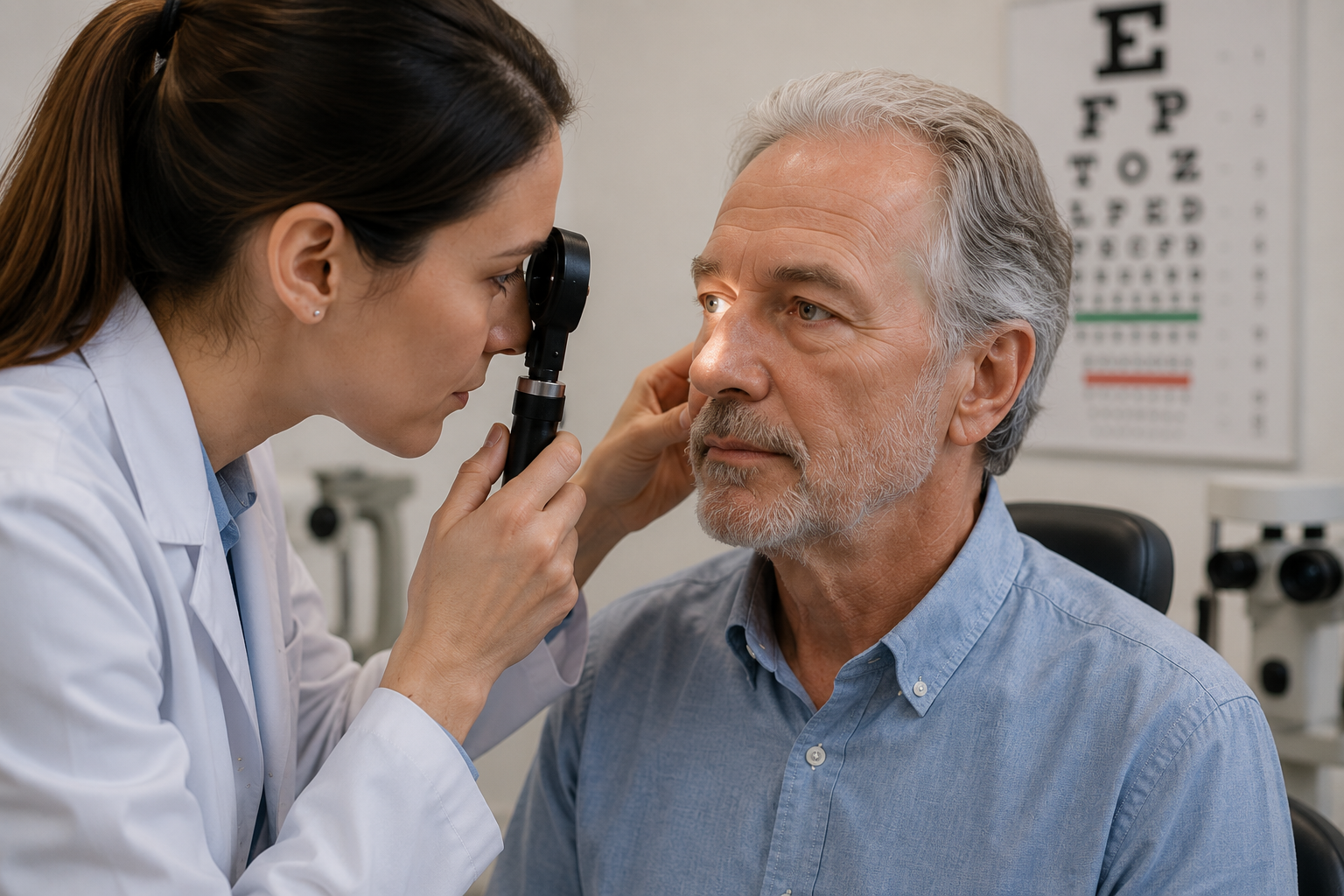
Step 1 is the physical inspection. The optician examines frame geometry, hinge play, nose support, lens seating and damage pattern. If the frame sits crooked on the face, fit is assessed on the wearer, not only on the bench.
Step 2 is the service decision. Minor adjustment, part replacement, full frame repair, restoration, or lens replacement are weighed against risk. If the frame is unsuitable for safe reglazing, that should be stated plainly.
Step 3 is the plan. The wearer gets a realistic explanation of what can be done in-house, what may need new parts, and what outcome is reasonable. Some jobs are same-day adjustments. Others need bench time or lens ordering.
“LUNETTES ART LAB’s in-house aftercare includes deep-dive adjustments, repairs and full restorations.”
If you need a repair review in Sydney, the booking link is here: https://lunettesartgroup.simplybook.net/v2/
Do chipped or cracked lenses count as repairable eyewear damage?
No, chipped or cracked lenses usually need replacement, and an outdated prescription may mean a fresh eye examination before new lenses are ordered.
Lens damage is a separate category from frame repair. Small coating marks, edge chips and central cracks do not improve with adjustment. They can affect clarity, safety and comfort. If the spectacles are otherwise in good condition, reglazing may be appropriate, but only if the frame is eligible.
This is where prescription details matter. A written prescription gives the lens specifications, but successful reglazing also depends on measurements like pupillary distance and fitting position. If the old lenses were uncomfortable, copying them exactly may repeat the problem.
Pro tip: keep the damaged lenses until the consultation. They show how the frame has been sitting and whether the previous lens size or bevel has contributed to stress.
Why do some repairs cost very little while others become complex?
Repair cost follows complexity, material and risk: a screw replacement may be minimal, while acetate restoration or designer reglazing carries more labour and breakage exposure.
Industry sources note that many opticians handle small adjustments for little to no expense, and some basic repairs may sit under $50. That does not mean all repairs should. A vintage acetate front, a broken hinge mount, or a full restoration with lens replacement is a different category of work.
Two trade-offs shape the price. The first is bench time. Precision reshaping, polishing, reinforcement and reassembly take longer than a quick alignment. The second is liability. If a fragile frame breaks during necessary handling, that risk has to be assessed before the job starts.
A useful rule is simple. If the issue is local and reversible, cost is usually lower. If the issue is structural and cumulative, expect restoration logic rather than quick-fix pricing.
What are the most common eyewear repair FAQs?
The short answer is that most questions come back to the same three issues: frame survival, lens compatibility and whether repair is still worth it.
Can broken spectacles always be repaired?
No. Many can, especially if the problem is the hinge, temple, nose pads or alignment. Frames with severe cracking, heavy shrinkage or failed previous glue repairs may not remain safe long term.
Is reglazing the same as full frame repair?
No. Reglazing means fitting new replacement lenses into an existing frame. Full frame repair focuses on the frame’s structure, stability and fit.
Can you convert existing frames for low nose bridge or Asian fit?
Often, yes. Some designer frames can be modified with nose pad solutions or bridge changes, which is different from simply buying a low bridge model.
Do I need a new prescription for replacement lenses?
Maybe. If your prescription is current and suitable, new lenses can often be ordered. If vision has changed or the old prescription is outdated, book an eye examination first.
Are vintage frames worth restoring?
Often, yes, if the material is stable and the frame has sentimental, design or brand value. A restoration assessment should happen before lens ordering.
For readers who want to understand the appointment-led model behind these services, see the How It Works page for eyewear consultations in Surry Hills.
If your spectacles need straightening, structural repair, restoration or lens replacement, book a 1:1 repair consultation here: https://lunettesartgroup.simplybook.net/v2/

Written by Ricky Lim