Why Night Driving Gets Harder After 45, and What a Precision Eye Scan Can Reveal
Night driving often gets harder after 45 because the eye’s natural lens becomes less flexible and less clear, which can reduce focus, lower contrast sensitivity and increase glare from headlights. A precision eye scan can show why vision feels less crisp, but it works best alongside a proper eye examination that checks for age-related eye disease as well.
By Ricky Lim, MOF-certified handcrafted eyewear maker, Certified Artisan Lunetier, Certified Optical Dispenser in Australia, Licensed Optician in South Korea, Certified Eyewear Stylist in the UK, with 10+ years and 10,000+ hands-on dispensing and repair cases.
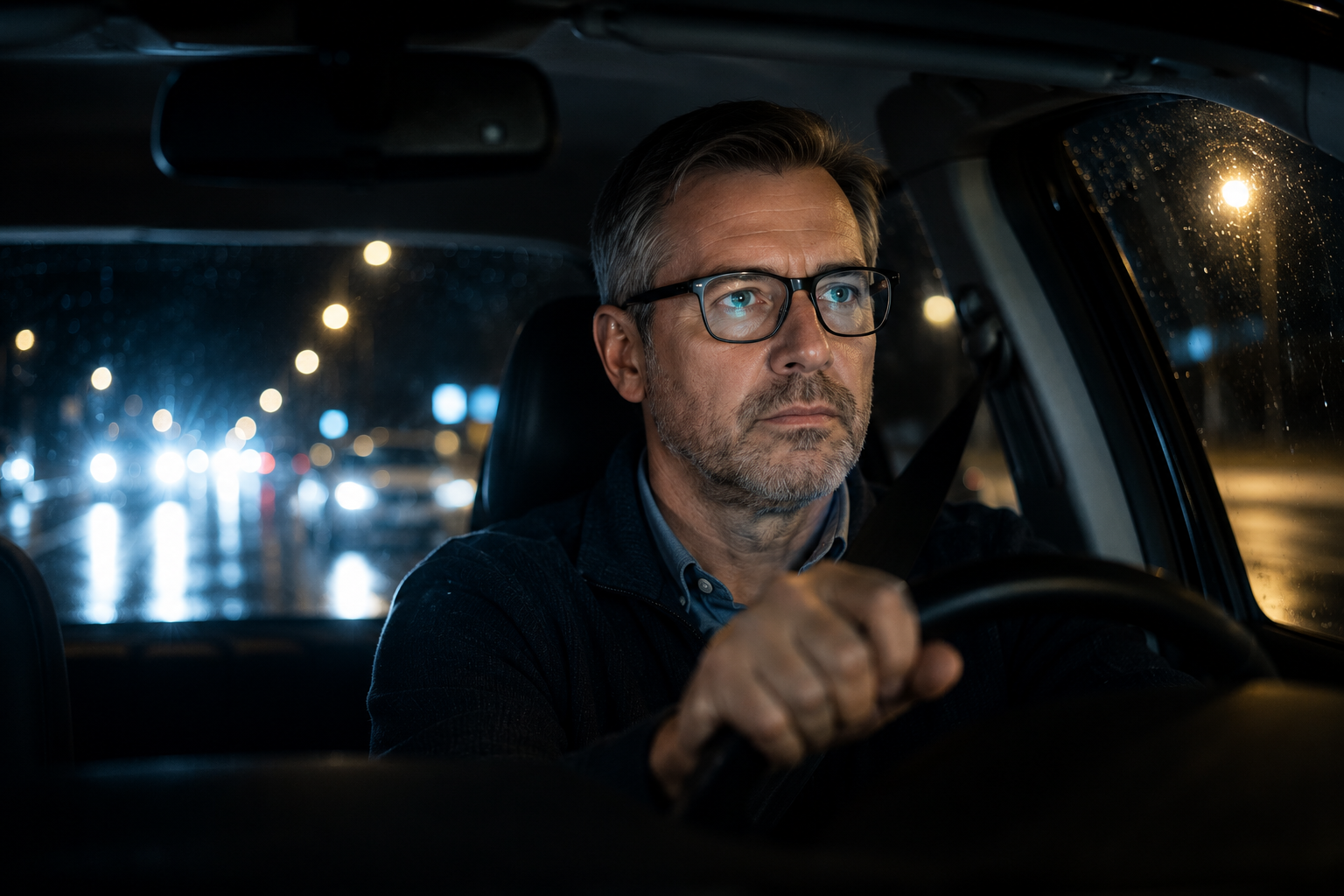
For many people in Surry Hills, Darlinghurst and across Sydney, the first sign of age-related vision change is not reading a menu. It is driving home at night and realising the road feels darker, headlights feel harsher, and signs seem harder to read until the last second.
That shift is common, but it should not be brushed off as something you simply have to live with. Night driving problems after 45 can come from normal lens ageing, an outdated prescription, uncorrected astigmatism, early cataract change, reduced contrast, or subtle optical issues that a standard prescription alone does not fully explain.
Why does night driving get harder after 45?
Age-related vision change after 45 commonly affects night driving because the eye needs more light, recovers more slowly from glare, and may no longer focus as cleanly as it once did.
Presbyopia usually begins after 45. The National Eye Institute describes it as a normal part of ageing caused by the eye’s lens becoming harder and less flexible, which affects how light is focused on the retina. Most people think of presbyopia as a near vision problem, and that is true, but the same ageing lens can also make visual performance feel less forgiving in low light.
The 41 to 60 age range is also when many people start noticing extra glare at night. The reason is simple. Light is not being focused as precisely as it used to be. Instead, more light scatter can happen inside the eye, and oncoming headlights can feel sharper, larger or more smeared than before.
Night driving can feel harder in a few different ways:
- harder to read road signs
- halos around headlights
- reduced confidence in rain or on dark roads
- slower recovery after bright glare
- eye strain by the time you get home
A lot of people assume this means they just need stronger glasses. Sometimes that is true. Often, the real answer is more specific than that.
What changes inside the eye can affect night driving?
Lens ageing is one of the main reasons night driving feels harder after 45, but it is not the only one. Prescription accuracy, pupil behaviour, astigmatism and early eye disease can all add to the problem.
The first change is optical quality. As the lens ages, it becomes less flexible and can become less transparent over time. Even before a cataract is obvious, the eye may scatter more light. That is one reason headlights can feel starry or washed out.
The second change is contrast sensitivity. Contrast sensitivity is the ability to pick subtle differences between an object and its background. Night driving depends on it. White lane markings on wet bitumen, pedestrians in dark clothing, and grey road edges are all contrast tasks, not just sharpness tasks.
The third change is prescription performance in low light. Pupil size changes in dark conditions, and that can make small optical imperfections more noticeable. Astigmatism is a common example. Healthdirect notes that astigmatism can cause trouble focusing and can lead to glare or halos around lights at night.
A few causes deserve extra care because they are not just comfort issues:
- Cataract changes: can increase glare, light scatter and washed-out vision
- Glaucoma: may affect side vision without early obvious symptoms
- Age-related macular degeneration: can affect central clarity and contrast
- Prescription drift: can leave vision technically wearable but not safe or comfortable for night driving
What should an eye exam check when night driving feels worse?
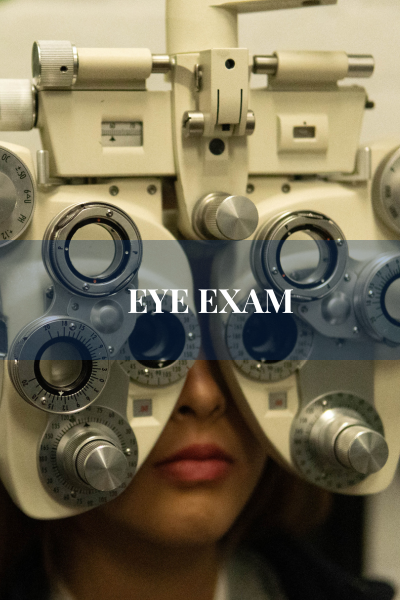
A comprehensive eye exam is the first step when night driving becomes difficult after 45 because it can check both prescription problems and eye health causes.
A proper exam should do more than confirm whether letters are clear on a chart. If someone says, “I can see okay in the day, but I hate driving at night,” that complaint needs to be taken seriously. The testing should be tied to the real situation, not only the prescription number.
The National Eye Institute describes a dilated eye exam as the best way to check eye health early, before vision loss occurs. Dilation allows the optometrist to assess internal eye health more fully and helps check for issues including glaucoma and age-related macular degeneration. A comprehensive exam may also include visual acuity, pupil response, tonometry and visual field checks where clinically appropriate.
At Lunettes Art Lab in Surry Hills, the point is not to hand over a generic pair of glasses and hope for the best. The point is to work out why the night driving feels worse, then match the exam findings, lens choice and frame fit to that problem.
|
Check |
What it helps reveal |
Why it matters for night driving |
|---|---|---|
|
Refraction and prescription review |
shortsightedness, longsightedness, astigmatism, presbyopic change |
blurry signs, poor focus, visual strain |
|
Dilated eye exam |
cataract signs, glaucoma risk, retinal and macular changes |
glare, reduced contrast, field loss |
|
Pupil assessment |
how the eyes respond in different light levels |
low-light performance and glare response |
|
Lens and frame review |
lens design, coatings, fit, optical centre placement |
clarity, comfort and stable vision in the car |
|
Precision biometric scan |
subtle optical imperfections beyond standard prescription |
sharper personalised night vision potential |
If night driving has become stressful, booking an eye exam or Vision Personalisation Studio session is a sensible next step: https://lunettesartgroup.simplybook.net/v2/
What can a precision eye scan reveal that a standard test may miss?
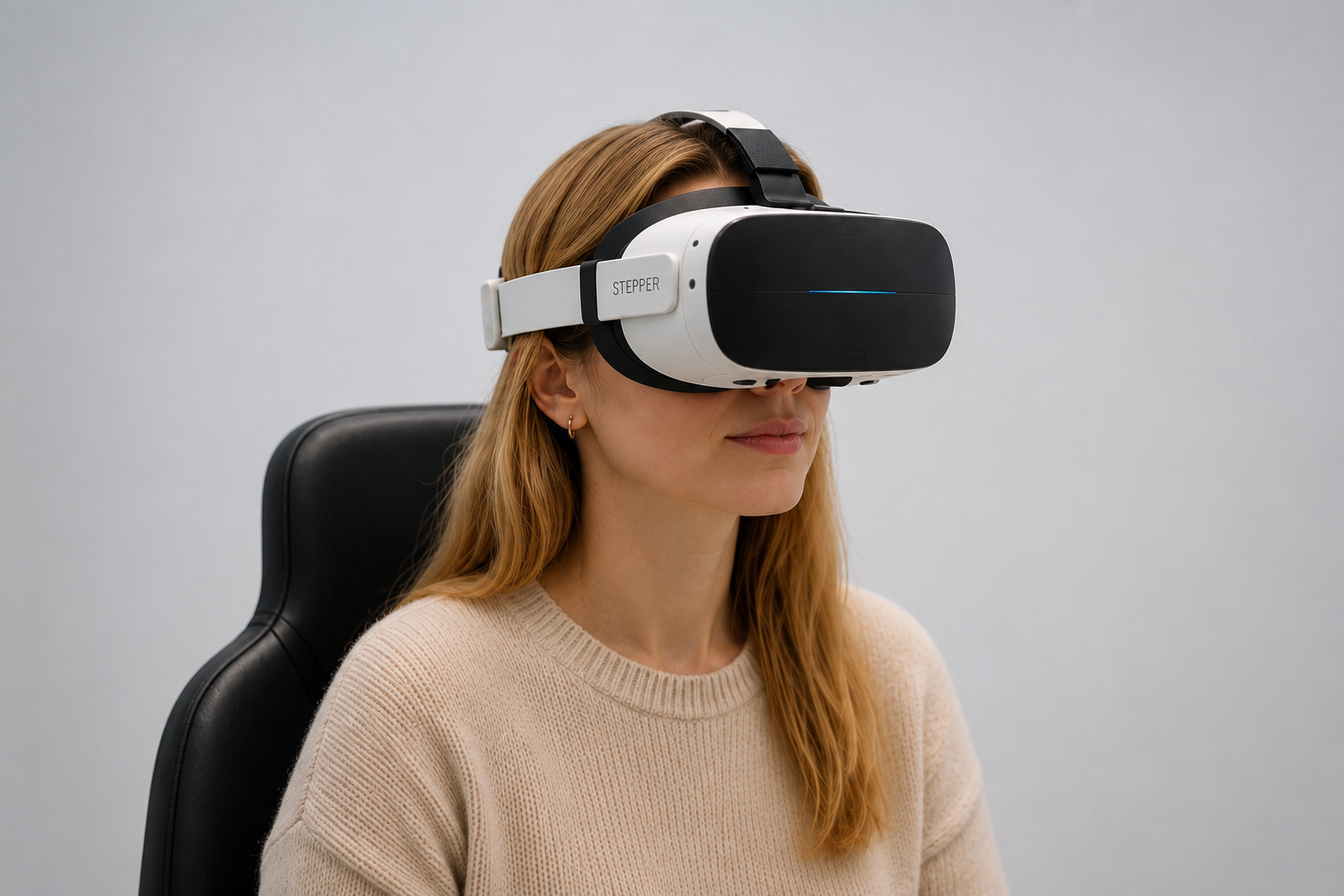
Rodenstock DNEye Scanner is the Eye layer of the Vision Personalisation Studio, and it captures more than 7,000 measurement points to build an individual biometric model of each eye.
A standard eye test gives a prescription. That matters, and it remains essential. A biometric eye scan adds another layer by measuring how the eye is physically built and how light is likely to behave inside that specific eye.
Rodenstock DNEye measures factors including lower and higher order aberrations, pupil size in daylight and low light, corneal topography, anterior chamber depth, crystalline lens power and axial eye length. That sounds technical, but the practical question is simple: why does vision still not feel crisp enough, especially at night?
Higher order aberrations are one of the most useful concepts here. A normal prescription can correct sphere and cylinder, but it does not fully describe every optical imperfection in the eye. Those finer irregularities can contribute to glare, halos, reduced contrast and the feeling that standard lenses are “correct” but still not satisfying.
That is where personalised lens calculation becomes valuable. When the eye model is more precise, the finished prescription lenses can be calculated with far more individual detail rather than being based on an average eye.
How is a precision eye scan different from a comprehensive eye exam?
A precision eye scan measures optical detail for lens personalisation, while a comprehensive eye exam checks prescription and eye health. Both matter, and one does not replace the other.
That distinction is worth being clear about. A biometric scan is excellent for refining lens accuracy and explaining why night vision feels off. A comprehensive eye exam is necessary for checking whether a health issue is contributing to the problem.
Think of the roles this way:
- Comprehensive eye exam: checks vision, prescription changes and eye health
- Biometric eye scan: measures the eye in finer optical detail for more personalised lenses
- Dispensing and fitting consultation: turns those measurements into lenses and frame positioning that work in real life
For night drivers, the strongest results often come from combining all three. A good prescription in the wrong lens design can still disappoint. A good lens in a poorly fitted frame can still miss its optical target.
Which symptoms suggest you should not wait?
Night driving symptoms deserve prompt attention when they are new, worsening, or affecting confidence behind the wheel.
Some people adapt gradually and do not realise how much effort they are using until they stop driving at night altogether. That can happen quietly over a few years.
Book an assessment if you notice any of the following:
- Halos or starbursts: especially around oncoming headlights
- Road signs appearing late: readable only when you are much closer
- More glare in wet weather: reflections feel smeared or dazzling
- Tired eyes after driving: even on familiar routes
- Reduced side awareness: difficulty noticing movement from the edges
- Prescription feels fine by day: but night vision still feels wrong
Those symptoms do not automatically mean disease, but they do justify proper testing.
Why does lens choice matter so much for night driving after 45?
Lens choice matters because night driving is affected by more than sharpness. Contrast, glare control, optical precision and frame fit all shape what you actually see on the road.
A person can have an updated prescription and still struggle because the lens design is not suited to the task. High prescriptions, early presbyopia, progressive lens wearers and people with astigmatism often notice this first in low light.
In practice, a night-driving solution may involve reviewing several details:
- anti-reflective performance
- lens design for the prescription range
- accurate optical centre placement
- frame wrap and tilt
- personalised lens calculation based on biometric measurement
At Lunettes Art Lab, lenses are not treated as a boxed product. They are part of a 1:1 dispensing process that includes visual troubleshooting, frame position, and in-house control over where the optical centres land. That is a very different approach from simply replacing lenses and hoping the numbers alone solve the problem.
What happens in a Vision Personalisation Studio session in Surry Hills?
Vision Personalisation Studio is a booked 1:1 consultation that combines eye measurement, problem analysis and lens planning around how the person actually sees.
For someone struggling with night driving, the session usually starts with the complaint itself. Is the issue glare, poor sharpness, delayed sign recognition, fatigue, or a lack of confidence on dark roads? That real-world description helps shape the next steps.
The Eye layer uses Rodenstock DNEye biometric measurement. The findings are then explained in plain language, not buried in jargon. If an eye exam is also needed, that should be arranged so eye health concerns are properly checked.
From there, the work moves into dispensing and fit. That includes lens pathway, frame suitability and how the eyewear will sit when worn. Precision means very little if the finished frame positions the lenses badly in front of the eyes.
Common questions about night driving after 45
Is worse night driving after 45 normal?
Yes, it is common. Age-related lens changes, presbyopia, glare sensitivity and reduced contrast often become more noticeable after 45. Common does not mean you should ignore it, especially if the change is affecting confidence or safety.
Can cataracts start as glare before vision seems very blurry?
Yes. Early cataract change can first show up as glare, halos or washed-out night vision before a person describes the whole world as blurry. An eye exam is the right way to check that.
Can astigmatism make headlights look worse at night?
Yes. Astigmatism can contribute to blur, halos and glare around lights at night. A prescription check can confirm whether that is part of the issue.
Does a biometric eye scan replace an eye exam?
No. A biometric eye scan helps personalise lenses by measuring the eye in greater optical detail. A comprehensive eye exam checks prescription and eye health, including possible causes like glaucoma, cataract change or macular disease.
Who benefits most from Rodenstock DNEye for night driving?
Night drivers who notice glare, halos, reduced contrast or vision that never feels fully crisp can benefit, especially if standard lenses have not felt good enough. People with stronger or more complex prescriptions often notice the difference most.
Can existing frames be used for new night-driving lenses?
Often, yes. Prescription lens replacement for existing frames can be suitable if the frame condition, shape and fit support the new lens design. A 1:1 consultation can confirm that.
If night driving has become harder and you want a clearer answer than “your eyes are just getting older”, book a no-pressure consultation in Surry Hills, Sydney. A proper eye exam, biometric eye scan and careful dispensing plan can show what is really going on and what can be improved: https://lunettesartgroup.simplybook.net/v2/

Written by Ricky Lim