
How Are Acetate Glasses Made? From Acetate Sheet to Finished Frame
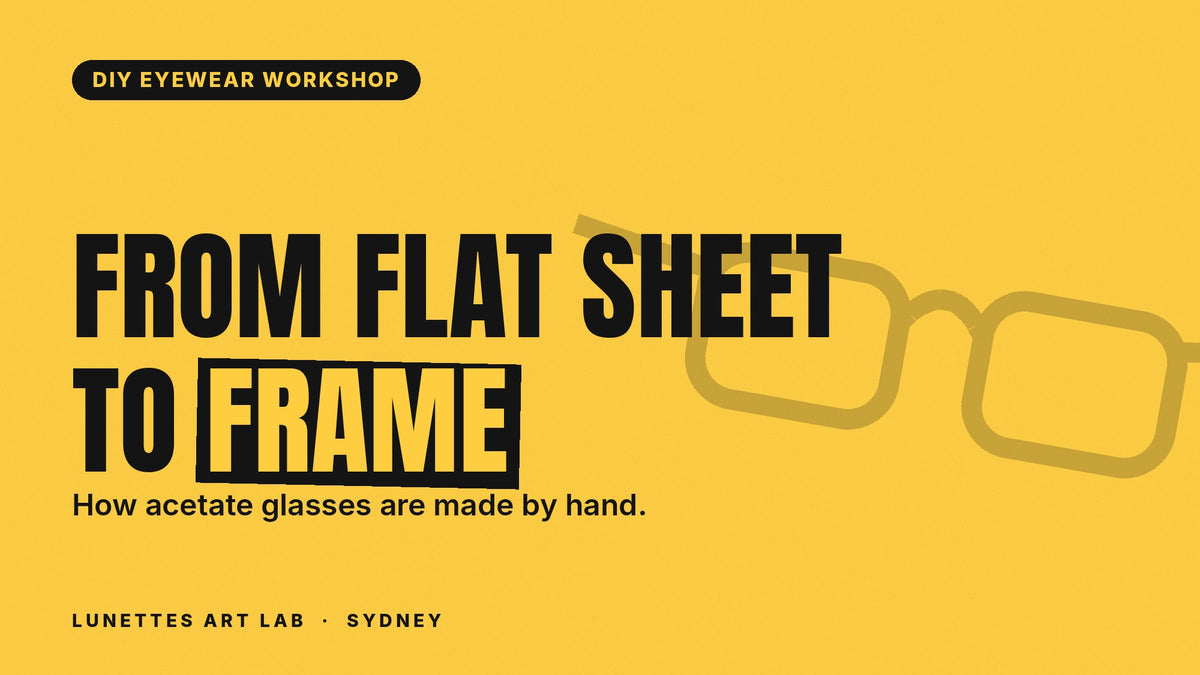
Acetate glasses are made by cutting a frame front out of a flat sheet of acetate, then filing, shaping, sanding and polishing it by hand before the temples and nose pads go on. It is slow, tactile work, and every frame comes out slightly different. In our 1-Day Beginner's DIY Eyewear Making Class, you get to do most of it yourself.
Key takeaways
- Acetate starts as a flat, coloured sheet.
- Most of the character of a frame comes from hand finishing.
- You can try the whole process in one day, no experience needed.
What is acetate, and why do eyewear makers love it?
Cellulose acetate is a plant-based plastic made into thick sheets for eyewear. Colours and patterns run through the whole sheet rather than being printed on top, which is why a tortoiseshell frame shows depth when you hold it to the light.
It can be cut, filed, polished to a deep shine and gently warmed to adjust, which makes it a favourite for handmade frames.
What are the steps from sheet to frame?
- Choose your shape and colour. The frame outline is drawn or traced onto the acetate.
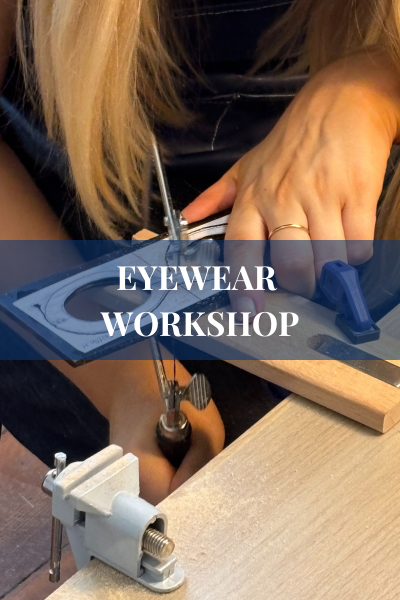
- Cut the front. The outline and lens openings are cut out by hand with a saw.
- File and shape. Edges are filed back to the line and the front is refined.
- Bevel the lens openings. A groove is shaped so lenses can sit securely.
- Shape the frame. The front is curved gently to follow the face.
- Sand and polish. Coarse to fine sanding, then polishing, brings out the shine.
- Fit temples and nose pads. Hinges and arms are attached, then the frame is adjusted to the wearer.

Which steps take the longest?
Filing and polishing. Cutting feels like the big moment, but the shape really appears as you file slowly back to your line. Polishing is where a rough piece of plastic turns into something that looks like it came from a shop.
| Stage | What you do | What it changes |
|---|---|---|
| Cutting | Saw the outline | Rough shape |
| Filing | Refine edges by hand | Final shape and thickness |
| Sanding | Smooth every surface | Comfort and finish |
| Polishing | Bring up the shine | The look people notice |
Tip if you join a workshop: pick a slightly simpler shape for your first frame. Fewer tight curves means more time for polishing, and the shine is what makes a frame look finished.
What happens in our DIY Eyewear Making Workshop?
Our 1-Day Beginner's DIY Eyewear Making Class runs in small groups of six, so there is plenty of guidance.
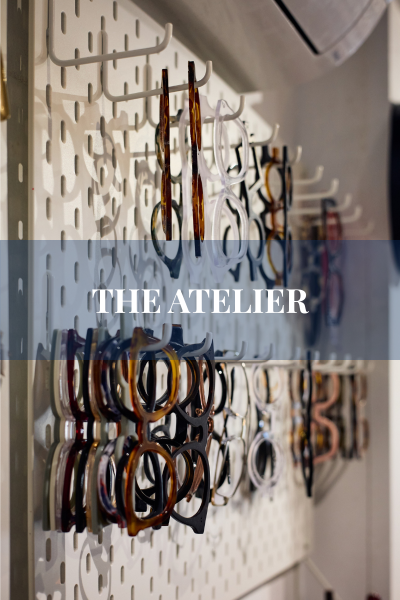
- You choose from a curated range of frame shapes, acetate colours and two stainless steel temple finishes with spring hinges.
- You hand-cut the front with a saw, then file, sand and polish it.
- We help with the technical steps: bevelling, shaping the frame and installing temples and nose pads.
- You can also craft a ring, keyring or pendant from leftover acetate.
- Non-prescription blue light or polarised sunglass lenses are included, and prescription lenses are available.
Frequently Asked Questions
Do I need any experience?
No. The class is designed for beginners, and we walk you through each step.
When can I take my glasses home?
Frames with non-prescription lenses are ready for pick-up the following day, with a short pre-booked fitting.
Can I come with a friend or partner?
Yes. Couples, friends and small groups are welcome, and private group sessions can be arranged.
Want prescription lenses in your frame? Read Can DIY Glasses Have Prescription Lenses?
Join Our DIY Eyewear Making Workshop
If you have ever wondered how glasses are made, the best way to find out is to make a pair. Spend a day at the bench in Surry Hills and leave with a frame you crafted yourself.
Already have glasses that need attention? Book a complimentary 15-minute Signature Fitting.
Lunettes Art Lab
- Address: 249 Riley Street, Surry Hills NSW 2010, Sydney
- Phone: (02) 8385 4996
- Website: lunettesartlab.com
- Book a complimentary 15-minute Signature Fitting: book online
- Book a comprehensive eye examination: book online

Written by Ricky Lim